
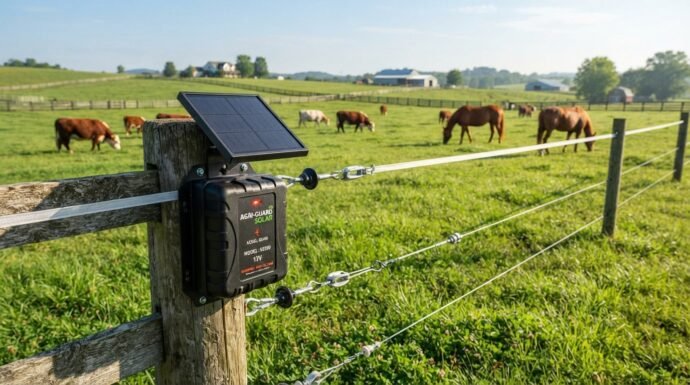
Best Solar Electric Fence Chargers for Livestock (2026)
Short answer: the ANDMON MINI400 is the best solar electric fence charger for livestock on most mid-size pastures. It is listed at 0.4 stored joules and up to 30 miles of fence, with a 12V sealed battery, a day or night mode and a listed reserve of about 14 sunless days. For a small paddock and a strong warranty, pick the Gallagher S12.
Table of Contents
- How we chose
- Quick comparison
- 1. ANDMON MINI400 30-Mile Solar Charger
- 2. Gallagher S12 Solar Fence Energizer
- 3. ANDMON 50-Mile Solar Charger
- 4. Epoify 0.18J Solar Fence Charger
- 5. 10-Mile 0.16J Portable Solar Charger
- How to choose a solar electric fence charger for livestock
- Mistakes to avoid
- FAQ
- Verdict by buyer type
- Related guides
How we chose
We did not field-test these energizers ourselves. The picks are based on manufacturer specs, product listings and owner feedback. We compared stored joules, output voltage where listed, fence-mile rating, battery type and backup, mounting and warranty.
Mile ratings assume a single clean wire with no weeds touching it. Real fences with several strands and grass contact cover much less, so treat those numbers as a ceiling.
Quick comparison
| Charger | Stored joules (listed) | Fence rating | Battery (listed) | Best for |
|---|---|---|---|---|
| ANDMON MINI400 | 0.4 J | 30 miles | 12V sealed, about 14 days | Mid-size pastures |
| Gallagher S12 | Not stated on listing | 4 miles | Internal | Small pastures, goats |
| ANDMON 50-Mile | 0.95 J | 50 miles | 12V, about 14 days | Cattle, long perimeters |
| Epoify | 0.18 J | 10 miles | Internal | Poultry and hobby farms |
| 10-Mile Portable | 0.16 J | 10 miles | Internal GEL | Strip grazing |
1. ANDMON MINI400 30-Mile Solar Charger
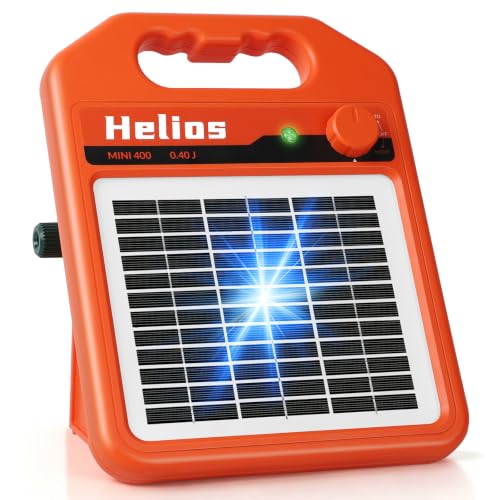
Who it is for: horses, cattle, sheep and goats on mid-size permanent or semi-permanent pastures.
Key facts: listed at 0.4 stored joules and up to 30 miles, low-impedance output, 12V sealed lead-acid battery, day or night mode and a listed reserve of about 14 sunless days.
Drawbacks: night mode slows the pulse rate, which saves power but may be less of a deterrent to predators that are active at night. Sealed lead-acid batteries lose capacity over a few seasons and will need replacing.
Skip it if: you mainly need to keep coyotes out of a poultry run at night. Leave it in day mode or choose a unit without a slowed night pulse.
2. Gallagher S12 Solar Fence Energizer
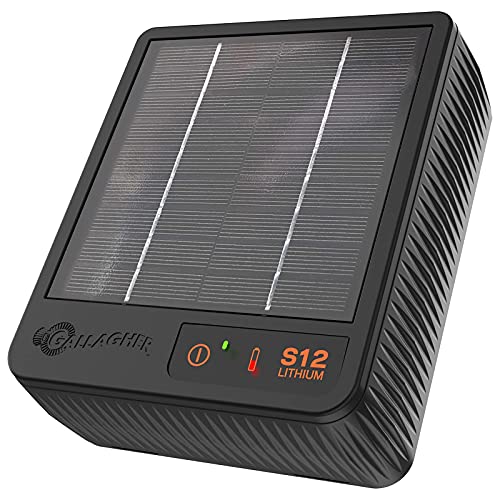
Who it is for: homesteaders with a small pasture or goat paddock who want a well-known brand and US support.
Key facts: listed for up to 4 miles of fence, mounts directly on a ground rod, weather-sealed housing, and a 3-year warranty with US support. Gallagher is a long-established electric fence brand.
Drawbacks: the 4-mile rating is low for its price tier. The battery needs a full charge before first use, and mounting on the ground rod means the panel position depends on where the rod goes.
Skip it if: you fence more than a few acres or run multi-strand cattle fence.
3. ANDMON 50-Mile Solar Charger
No products found.
Who it is for: cattle and long perimeter fences where weeds touch the bottom wire.
Key facts: listed at 0.95 stored joules and up to 50 miles, a 12V battery with a listed reserve of about 14 sunless days, and a DC jack for topping up from another source.
Drawbacks: bulkier and heavier than the small units, so it is not a good fit for frequent moves. Near 1 joule, the shock is strong enough that it is overkill for poultry netting.
Skip it if: you rotate small paddocks daily.
4. Epoify 0.18J Solar Fence Charger
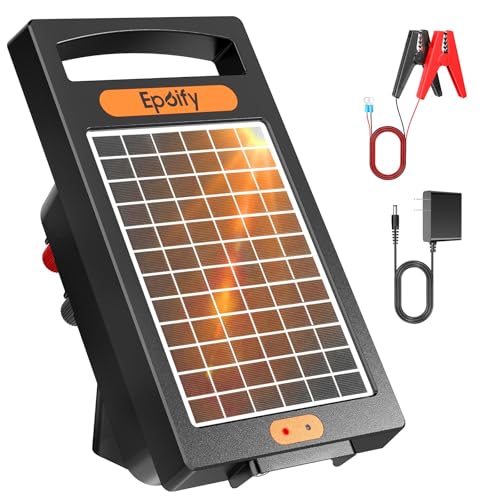
Who it is for: hobby farms with poultry, goats or a garden to protect.
Key facts: listed at 0.18 joules, roughly 5,700 to 10,200 volts and up to 10 miles, a weather-sealed case and a mount that hangs on T-posts or wood stakes.
Drawbacks: low joules mean the shock weakens fast when weeds touch the wire. Battery reserve is not clearly listed.
Skip it if: you need to hold cattle on a long multi-strand fence.
5. 10-Mile 0.16J Portable Solar Charger
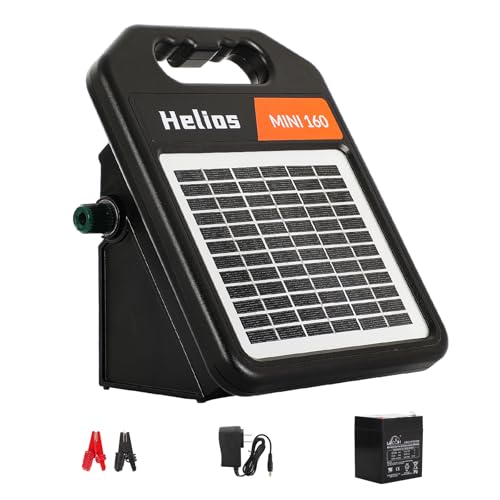
Who it is for: strip grazing and temporary paddocks that move often.
Key facts: listed at 0.16 joules and up to 10 miles, an all-in-one design with an internal GEL battery, a 360-degree swivel mount and a carry handle, plus day and night modes.
Drawbacks: the lowest output here, so it struggles with weedy fence lines. The listing does not name the brand clearly, which can make support harder.
Skip it if: your fence is permanent and long, or your stock is used to pushing through wire.
How to choose a solar electric fence charger for livestock
- Joules by animal: about 0.1 to 0.25 J suits poultry, small paddocks and clean wire. Cattle, wooly sheep and weedy lines need about 0.4 to 1 J or more.
- Real fence length: multiply your perimeter by the number of hot strands. Three strands around a 1-mile perimeter is 3 miles of wire. Buy a rating well above that.
- Battery backup: in cloudy climates or winter, look for at least several days of listed reserve.
- Portability: all-in-one units with handles suit rotational grazing; larger units suit fixed perimeters.
- Grounding: a common guide is at least 3 feet of ground rod per joule, with rods about 10 feet apart. Poor grounding is the top cause of weak fences.
Mistakes to avoid
- Shading the panel. Face it south in the Northern Hemisphere, clear of trees and tall grass.
- Skipping the first charge. Most units need a full charge before they go on the fence.
- Letting weeds grow into the bottom wire. Every contact drains voltage. Mow under the fence or raise the lowest strand.
- Not checking voltage. Use a fence tester at the far end of the line. Many keepers aim for at least 3,000 to 4,000 volts for most livestock.
FAQ
How many joules do I need for a livestock fence?
For poultry, small paddocks and clean single wires, 0.1 to 0.25 joules is usually enough. For cattle, sheep with thick wool, or long fences where weeds touch the wire, choose about 0.4 to 1 joule. More joules keep the shock strong when grass drains power from the line.
Do solar fence chargers work on cloudy days?
Yes, as long as the battery has stored enough charge. Each unit runs from an internal battery that the panel tops up in daylight. Listed reserves range from a day or two on small units to about two weeks on larger ANDMON models. Long cloudy spells in winter can still drain smaller batteries.
How many ground rods do I need?
Small chargers under about 0.5 joules often work with one 3- to 6-foot galvanized rod in moist soil. Larger units do better with two or three rods about 10 feet apart, joined with heavy galvanized wire. Dry or sandy soil needs more rod length to give a solid ground.
Can I use polywire and tape with a solar charger?
Yes. Solar chargers work with polywire, poly tape, poly rope and steel wire. Poly products carry current less well than steel, so long poly runs lose more voltage. If you use a lot of polywire, choose a charger with a higher joule rating than the mile rating alone suggests.
Verdict by buyer type
- Most mid-size pastures: ANDMON MINI400.
- Small pastures, trusted brand: Gallagher S12.
- Cattle and long perimeters: ANDMON 50-Mile.
- Poultry and hobby farms: Epoify 0.18J.
- Strip grazing: 10-Mile 0.16J portable unit.
Related guides
- Water trough heaters for livestock
- Gas powered post hole diggers
- Utility wagons for farm hauling
- Beekeeping starter kits for beginners
Last update on 2026-11-26/Affiliate links / Images from Amazon Product Advertising API


One Comment