4 Best Gas-Powered Garden Tillers (2026)
Short answer: for a typical vegetable garden that is already broken ground, the BILT HARD 99cc 4-cycle tiller is the pick from this group: a four-stroke engine (no fuel mixing), adjustable width up to about 24 inches and rear transport wheels. For small beds, the BILT HARD 46cc is lighter and easier to steer. All four are front-tine cultivators; if you need to break sod or hard clay for a new plot, a rear-tine tiller is the better tool.
How we chose
We have not tilled with these machines ourselves. The picks are based on manufacturer specifications, product documentation and listings, and owner feedback, compared against what a gas garden tiller has to do: dig to a useful depth for your beds, cover your garden in a reasonable number of passes, start reliably and be manageable for the person using it. Several of these are marketplace brands, so confirm the exact model, width and depth on the listing before you buy.
Quick comparison
| Tiller | Engine | Width / depth (listed) | Best for | Not for |
|---|---|---|---|---|
| BILT HARD 99cc | 99cc 4-stroke | Adjustable, up to about 24 in | Medium vegetable gardens | Breaking new sod |
| Mutaomay 212cc | 212cc 4-stroke, forward and reverse | 21 in | Larger gardens, heavier soil | Narrow beds, buyers who need verified specs |
| BILT HARD 46cc | 46cc 4-stroke | About 16 in wide, 8 in deep | Small beds and routine cultivation | Large plots |
| VEVOR 43cc | 43cc 2-stroke | About 11.8 in wide, 3.9 in deep | Weeding and loosening the surface | Deep soil prep |
Best for most vegetable gardens: BILT HARD 99cc 4-cycle


The 99cc sits between compact cultivators and full-size tillers. BILT HARD’s documentation for its 99cc model describes a four-stroke engine, tilling width you can adjust by adding or removing tines, rear transport wheels and safety controls. Adjustable width is useful in a vegetable garden: narrow between rows, wide on open beds.
Drawbacks: as a front-tine machine it tends to bounce and pull on hard or untilled ground. Assembly takes time. Confirm the exact width and depth range for this version on the listing, as specifications differ between related models.
Skip it if: your main job is turning lawn into a new garden.
For larger gardens: Mutaomay 212cc
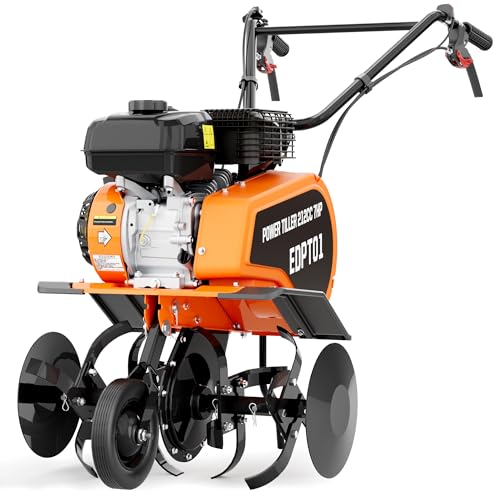
The Mutaomay is listed with a 212cc four-stroke engine, a 21-inch working width and forward and reverse. That is a lot more engine than the small cultivators here, and reverse makes it easier to back out of corners and tight row ends.
Drawbacks: specifications come from the seller listing and could not be confirmed against a manual, so check transmission, tine type and weight before ordering. It is heavy and wide for narrow beds and raised beds. Parts and service support for marketplace brands can be hard to find.
Skip it if: your garden is mostly narrow beds or raised beds.
For small beds: BILT HARD 46cc

A compact four-stroke cultivator with a documented working width of about 16 inches and a maximum depth of about 8 inches. The separate fuel and oil system means no premixing. It is light enough to lift into raised beds and easy to steer around existing plants.
Drawbacks: the small engine is not meant for large areas or heavy, compacted soil; expect several passes to reach full depth. Narrow width means more passes on open ground.
Skip it if: you have more than a few small beds to work.
For light cultivation: VEVOR 43cc

The VEVOR is a small two-stroke cultivator with four steel tines, transport wheels and a documented width of about 11.8 inches and depth of about 3.9 inches. It suits weeding between rows and loosening the top few inches of established beds.
Drawbacks: under 4 inches of depth is too shallow for preparing a new bed. The two-stroke engine needs mixed fuel at the stated ratio, and two-strokes are louder and smokier than four-strokes.
Skip it if: you want one machine for both deep bed prep and weeding.
How to choose a gas garden tiller
- Front-tine or rear-tine: front-tine cultivators like these are lighter and cheaper and work well in loose or previously tilled soil. Rear-tine tillers are heavier, self-propelled and far better at breaking sod and clay.
- Garden size: roughly, under 1,000 sq ft suits a 40 to 50cc cultivator; 1,000 to 5,000 sq ft suits 99cc to 212cc machines; beyond that, consider a rear-tine tiller or a tractor implement.
- Depth: most vegetables need 6 to 8 inches of loosened soil. A cultivator rated for 4 inches is for weeding, not bed prep.
- Two-stroke or four-stroke: four-strokes run on straight gas and are quieter; two-strokes are lighter but need mixed fuel.
- Parts and support: check that replacement tines, belts and a manual are available.
Mistakes to avoid
- Tilling wet soil. It clumps and compacts; wait until a handful crumbles rather than forming a ball.
- Forcing full depth in one pass. Make a shallow pass first, then go deeper.
- Tilling over stones and roots without clearing them; they bend tines and jar the machine.
- Over-tilling every year. It breaks down soil structure; many gardeners till only when preparing new beds or working in compost.
- Storing it with fuel in the tank over winter. Use stabilizer or run it dry.
Frequently asked questions
What size gas tiller do I need for a home garden?
For a few small or raised beds, a 40 to 50cc cultivator is enough. For a typical vegetable garden of a few thousand square feet in soil that has been worked before, a 99cc to 212cc front-tine tiller saves a lot of time. For new ground, heavy clay or anything over about a quarter acre, a rear-tine tiller is the better choice.
Can a front-tine tiller break new ground?
It can, but it is hard work. Front tines pull the machine forward and tend to bounce across sod and compacted soil, so you hold it back and make many shallow passes. Removing or killing the sod first helps. For regularly breaking new ground, a rear-tine tiller is heavier and steadier and does the job much faster.
How deep should I till a vegetable garden?
Six to eight inches covers the root zone of most vegetables. Root crops such as carrots and parsnips benefit from looser soil deeper still, which is often done by double-digging or broadforking rather than tilling. For mixing in compost on established beds, a few inches is usually enough.
Is a two-stroke or four-stroke tiller better?
For most home gardeners, four-stroke. It runs on regular gasoline with separate oil, is quieter and usually starts more consistently. Two-stroke cultivators are lighter and simpler, which helps in small beds, but you must mix fuel and oil at the stated ratio every time, and they produce more exhaust.
Verdict by buyer type
- Medium vegetable garden in worked soil: BILT HARD 99cc.
- Larger garden, want reverse: Mutaomay 212cc, after confirming the listing.
- Small or raised beds: BILT HARD 46cc.
- Weeding and surface cultivation only: VEVOR 43cc.
Related guides
- Best mini rototillers
- Best electric cultivators for raised beds
- Best walk-behind seeders for food plots
- Best soil test kits
Last update on 2026-11-17/Affiliate links / Images from Amazon Product Advertising API