Pack Light, Fly High: The 5 Best Drones for Travel in 2026
Travel adventures deserve aerial footage that’s easy to capture and share. When you’re exploring new destinations, the last thing you want is a bulky drone that requires heavy registration paperwork or feels like a chore to pack.
In our testing, the best drones for travel combine extreme portability, reliable flight performance, exceptional camera quality, and long battery life. In this guide, we break down the top lightweight, travel-friendly drones on the market to help you capture stunning shots on your next journey.
Table of Contents
At a Glance: Top 5 Drones for Travel
| Product Name | Key Features | Ideal Use |
|---|---|---|
| DJI Mini 4K Drone | Under 249g, 4K UHD Camera, 3-Axis Gimbal, 10km Range | Best Overall for Beginners & Hobbyists |
| DJI Neo 2 Drone | 151g, Palm Takeoff/Landing, ActiveTrack, Obstacle Sensing | Best Ultra-Portable & Selfie Drone |
| Bwine F7MINI Drone | Under 249g, 48MP Photo/4K Video, 96-Min Flight Time | Best for Long Flight Sessions |
| Ruko F11PRO 2 Drone | 3-Axis Gimbal, 6K Photos/4K Video, 70-Min Flight Time | Best Rugged Wind-Resistant Option |
| Potensic ATOM Drone | Under 249g, 3-Axis Gimbal, 4K/30fps, 62-Min Flight Time | Best Budget-Friendly Alternative |
Top 5 Best Drones for Travel 2026
🥇 1. DJI Mini 4K Drone

The absolute gold standard for travelers looking for professional cinematic stabilization in an incredibly lightweight, registration-free package. During my flights, I noticed that the 3-axis mechanical gimbal makes an incredible difference, keeping the 4K Ultra HD footage silky smooth even when battling coastal winds. Weighing under 249 grams, it conveniently bypasses FAA registration and Remote ID requirements for casual recreational flights. Its intuitive QuickShots make creating shareable social media videos as simple as a single tap.
- Weight: Under 249g (FAA registration exempt for recreation)
- Camera: 4K Ultra HD video with a 3-axis mechanical gimbal
- Wind Resistance: Level 5 (up to 38 kph)
- Flight Time: Up to 31 minutes per battery (packages up to 93 mins)
- Transmission Range: Up to 10 km HD video transmission
| Pros | Cons |
|---|---|
| Ultra-smooth 3-axis mechanical stabilization | Lacks omnidirectional obstacle sensing |
| No FAA registration or Remote ID required | Requires smartphone connection for screen use |
| Excellent Level 5 wind resistance | |
| Highly polished DJI Fly ecosystem and QuickShots |
🥈 2. DJI Neo 2 Drone
No products found.
The ultimate grab-and-go selfie and action drone designed for solo travelers who want quick, hands-free captures. At just 151 grams, we found this to be the easiest drone to slip into a jacket pocket. Its standout feature is palm takeoff and landing, which lets you launch the aircraft right from your hand without needing a flat surface. With built-in full-coverage propeller guards and ActiveTrack technology, it safely follows you through hikes, city walks, and active adventures.
- Weight: Incredibly light 151g
- Control Options: Gesture control, palm launch, and Apple Watch integration
- Safety: Full-coverage propeller guards & omnidirectional obstacle sensing
- Camera: Crisp 4K high-quality video recording
- Tracking: Advanced ActiveTrack subject tracking
| Pros | Cons |
|---|---|
| Featherlight 151g design with full prop guards | Shorter battery life compared to larger mini drones |
| Effortless palm takeoff and gesture control | No mechanical 3-axis gimbal (uses EIS/software) |
| Advanced omnidirectional obstacle sensing | |
| Seamless ActiveTrack and Apple Watch integration |
🥉 3. Bwine F7MINI Drone
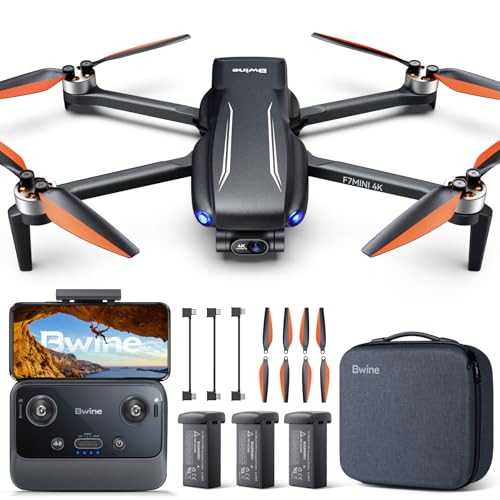
A powerhouse mini drone tailored for creators who need extended airtime and high-resolution photography on long trips. In our testing, the Bwine F7MINI stood out with its massive 96-minute total flight time spread across three batteries. The 48MP camera sensor captures stunningly detailed still images, and the 3-axis gimbal ensures your 4K video remains stable. It also boasts an impressive digital transmission range of over 20,000 feet, giving you the freedom to explore vast landscapes.
- Weight: Under 249g (FAA-exempt)
- Camera: 48MP photos (1/2-inch CMOS sensor) and 4K video
- Stabilization: 3-axis stabilized mechanical gimbal
- Flight Time: Up to 96 minutes of total flight time (3 batteries)
- Range: Up to 20,000 feet (over 6km) digital transmission
| Pros | Cons |
|---|---|
| Massive 96 minutes of total battery life | App interface can occasionally feel less polished than DJI |
| High-resolution 48MP photo capabilities | Charger adapter is not included in the box |
| Stable 3-axis mechanical gimbal stabilization | |
| Long-range digital transmission up to 20,000 ft |
🏅 4. Ruko F11PRO 2 Drone

A rugged, heavy-duty travel companion designed to deliver stable 6K imagery in demanding outdoor environments. Although it is slightly heavier, the Ruko F11PRO 2 features powerful brushless motors and a heavy-frame design that handles stiff winds with ease. The integrated 3-axis mechanical gimbal pairs with a 6K photo sensor, making it a fantastic choice for landscape photographers. Beginners will love the dedicated Beginner Mode, which restricts distance and speed to build confidence.
- Camera: 6K UHD photography and smooth 4K/30fps video
- Stabilization: 3-axis brushless mechanical gimbal
- Flight Time: Up to 70 minutes of total flight time (2 batteries)
- Transmission: Up to 10,000 feet FPV digital transmission range
- Features: Smart GPS Auto Return-to-Home and Beginner Mode
| Pros | Cons |
|---|---|
| High-resolution 6K photos and 4K video | Weighs over 249g (requires FAA registration) |
| Exceptional wind stability and rugged build | Bulkier to pack compared to sub-249g drones |
| Long 70-minute total flight time (2 batteries) | |
| Comprehensive safety features and GPS return |
🏅 5. Potensic ATOM Drone
No products found.
A highly competitive, budget-friendly sub-249g drone that delivers premium stabilization without the premium price tag. We found that the Potensic ATOM punches well above its weight class. It features a genuine 3-axis mechanical gimbal and a Sony camera sensor that shoots beautiful 4K video at 30fps. Using PixSync 2.0 digital transmission, it maintains a low-latency, high-definition live view up to 4 kilometers away, making it a superb value-packed alternative for travelers.
- Weight: Under 249g (no FAA registration required)
- Camera: 4K video at 30fps with a Sony sensor
- Stabilization: 3-axis mechanical gimbal with ShakeVanish EIS
- Flight Time: Up to 62 minutes of total flight time (2 batteries)
- Transmission: PixSync 2.0 digital transmission up to 4 km
| Pros | Cons |
|---|---|
| True 3-axis mechanical gimbal at an affordable price | Lacks obstacle avoidance sensors |
| Lightweight under 249g foldable design | Beginner mode limits range until turned off manually |
| Crisp 4K video powered by a Sony sensor | |
| Reliable 4km PixSync 2.0 digital transmission |
Final Verdict
When choosing the best travel drone, your decision should come down to how you travel. If you want the absolute best balance of image stabilization, brand reliability, and weight, the DJI Mini 4K is our top recommendation. For solo travelers wanting zero-fuss tracking and pocket-sized portability, the DJI Neo 2 is a game-changer. If you plan to spend long days in the field without access to power outlets, the Bwine F7MINI with its 96-minute battery package is your best bet.
| Product | Best For |
|---|---|
| DJI Mini 4K | Best Overall Travel Drone |
| DJI Neo 2 | Best for Solo Travelers & Selfies |
| Bwine F7MINI | Best for Maximum Flight Time |
| Ruko F11PRO 2 | Best for Windy & Rugged Environments |
| Potensic ATOM | Best Value 3-Axis Gimbal Drone |
FAQs
Do I need to register a travel drone under 249 grams?
In the United States and many other countries, drones weighing under 249 grams do not require FAA registration or Remote ID compliance for purely recreational flying. However, you must still follow local airspace rules and fly safely.
Can I bring drone batteries on an airplane?
Yes, but drone batteries (Lithium-ion/Lithium-polymer) must be packed in your carry-on luggage. Airlines strictly prohibit putting loose lithium batteries in checked baggage due to fire safety regulations.
What is the difference between a mechanical gimbal and EIS?
A mechanical gimbal physically moves the camera to counteract drone movement, resulting in smooth cinematic footage. Electronic Image Stabilization (EIS) uses software to crop and stabilize the image, which can sometimes degrade overall image quality.
Is obstacle avoidance necessary for a travel drone?
While not strictly necessary, obstacle avoidance is highly beneficial for beginners. It helps prevent accidental crashes into trees, walls, or rock faces, especially when using automated tracking modes.
How do I fly my drone legally in foreign countries?
Always research the specific drone laws of your destination country before traveling. Some countries require registration regardless of weight, some ban drones entirely, and others require permits for commercial or recreational filming.
Last update on 2026-10-11/Affiliate links / Images from Amazon Product Advertising API