Pro Shooting Time : The 5 Best Professional Drone for Cinematography (2026)
Choosing the best professional drone for cinematography, involves more than looking at video resolution or maximum flight time. Filmmakers need to consider sensor size, lens selection, color profiles, stabilization, obstacle sensing, battery endurance, and how easily the footage fits into a professional editing workflow.
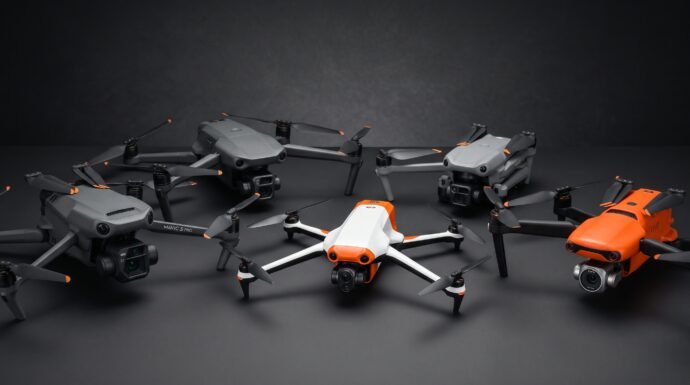
The five drones in this comparison serve different creative needs. The DJI Mavic 4 Pro is aimed at filmmakers seeking a high-end triple-camera system, while the DJI Mavic 3 Pro offers three distinct focal lengths and a large main sensor. The DJI Air 3S provides a more travel-friendly dual-camera setup, the Autel EVO II Pro 6K emphasizes adjustable camera settings, and the Antigravity A1 takes a different approach with 360-degree aerial capture.
Table of Contents
At a Glance
| Product | Verified Key Features | Ideal Use Case |
|---|---|---|
| DJI Mavic 3 Pro | Four-thirds Hasselblad main camera, two telephoto cameras, 5.1K video at up to 50 fps on the main camera, omnidirectional obstacle sensing | Commercial films, landscapes, real estate and cinematic establishing shots |
| DJI Mavic 4 Pro | Four-thirds Hasselblad main camera, 100 MP still photography, 6K/60 fps HDR main-camera video, rotating Infinity Gimbal | High-end productions needing flexible camera angles and multiple focal lengths |
| DJI Air 3S | One-inch main sensor, 70 mm-equivalent medium telephoto camera, 4K/60 fps HDR, 42 GB internal storage | Travel filmmaking, property videos and independent creators |
| Autel EVO II Pro 6K Drone | One-inch CMOS camera, 6K video, adjustable aperture and 20 MP still photography | Controlled exposure, aerial commercial work and detailed landscape footage |
| Antigravity A1 Infinity | 360-degree aerial capture, reframing in post-production, immersive viewing workflow | Immersive storytelling, action sequences and creative aerial perspectives |
Top 5 Best Professional Drone for Cinematography
1. DJI Mavic 3 Pro

Overview
The DJI Mavic 3 Pro is a strong option for filmmakers who want several optical perspectives without carrying multiple aircraft. Its triple-camera arrangement combines a four-thirds Hasselblad main camera with 70 mm-equivalent medium telephoto and 166 mm-equivalent telephoto cameras.
The main camera records up to 5.1K video at 50 frames per second, providing room for detailed landscape footage and flexible post-production. The two additional cameras help filmmakers change composition without repositioning the aircraft as much, which can be useful for property films, travel documentaries and cinematic sequences.
Its maximum rated flight time is 43 minutes, and DJI specifies omnidirectional obstacle sensing. The standard Mavic 3 Pro should not be confused with the Mavic 3 Pro Cine, which has different storage and professional recording capabilities. DJI official specifications
5 Key Features
- Four-thirds Hasselblad main camera: The 20 MP main camera has a 24 mm-equivalent lens and adjustable aperture from f/2.8 to f/11. This offers greater exposure control than a fixed-aperture lens when managing bright skies or changing daylight.
- Triple-camera system: The 24 mm, 70 mm and 166 mm-equivalent lenses provide wide, medium-telephoto and long-telephoto framing options from one aircraft.
- 5.1K video recording: The main camera supports 5.1K recording at up to 50 fps, providing detailed footage for high-resolution delivery and cropping flexibility.
- Omnidirectional obstacle sensing: Vision-based sensing helps detect obstacles around the aircraft. It remains an aid rather than a substitute for pilot judgment and a clear flight path.
- Up to 43 minutes of rated flight time: This maximum gives a useful planning reference for location scouting and aerial takes, although actual flight time varies with wind, temperature, flight style and battery condition.
Pros
- Three optical focal lengths expand creative framing options.
- The four-thirds main sensor is well suited to demanding aerial image capture.
- The main camera’s adjustable aperture offers useful exposure control.
- Omnidirectional obstacle sensing adds assistance during complex flights.
Cons
- The additional telephoto cameras do not have the same sensor size as the main camera.
- The maximum flight-time figure should not be treated as a guaranteed working duration.
2. DJI Mavic 4 Pro

Overview
The DJI Mavic 4 Pro is designed for filmmakers who want a more advanced multi-camera aircraft with additional freedom in camera positioning. DJI lists a four-thirds Hasselblad main camera, a 100 MP still-photo capability and 6K/60 fps HDR recording from the main camera.
Its Infinity Gimbal is a major differentiator. The rotating gimbal supports unusual camera orientations and upward-looking compositions that can be difficult to achieve with conventional drone gimbals. Combined with its two additional cameras, this makes the aircraft attractive for carefully planned commercial films, architectural sequences and cinematic landscape work.
DJI rates its maximum flight time at 51 minutes. As with all rated figures, actual performance depends on conditions and how the drone is operated. The main reasons to consider it are its camera versatility, high-resolution capture and unusual gimbal movement rather than resolution alone. DJI Mavic 4 Pro product information
5 Key Features
- Four-thirds Hasselblad main camera: The main camera combines a large sensor format with a 100 MP still-image capability, making it suitable for detailed aerial photography as well as video.
- 6K/60 fps HDR video: The main camera’s recording specification offers resolution headroom for detailed footage and high-resolution post-production workflows.
- Triple-camera configuration: Dedicated wide and telephoto perspectives give filmmakers options for changing shot scale without relying entirely on digital cropping.
- Infinity Gimbal: The gimbal’s rotating design allows unusual camera orientations, including upward-looking compositions, creating options for shots that standard gimbals cannot reproduce in the same way.
- Up to 51 minutes of rated flight time: The manufacturer’s maximum provides a useful reference for planning, but working flight time will be shorter or longer depending on operating conditions.
Pros
- High-resolution main-camera capture suits detail-oriented productions.
- Multiple cameras allow varied compositions during a shoot.
- The Infinity Gimbal supports distinctive camera movements and angles.
- The rated flight time offers a substantial planning window under suitable conditions.
Cons
- Its flagship camera and gimbal features may be unnecessary for casual or occasional aerial filming.
- The advanced gimbal and multi-camera workflow require careful handling and preparation.
3. DJI Air 3S
No products found.
Overview
The DJI Air 3S is a compact dual-camera drone intended for creators who want strong imaging capabilities without moving to a larger flagship aircraft. DJI specifies a one-inch CMOS main camera and a 70 mm-equivalent medium telephoto camera. Both cameras support 4K video recording, including 4K/60 fps HDR and 4K/120 fps recording options.
Its main camera has an f/1.8 aperture, while the medium telephoto camera provides a tighter perspective for subjects that benefit from compressed framing. The aircraft also includes forward-facing LiDAR, omnidirectional vision sensing and 42 GB of built-in storage.
With a maximum rated flight time of 45 minutes and a listed takeoff weight of 724 g, the Air 3S is appealing to travel filmmakers, solo operators and creators who regularly move between locations. It gives up the Mavic Pro models’ three-camera arrangements but remains a practical option for a broad range of aerial projects. DJI Air 3S official specifications
5 Key Features
- One-inch CMOS main camera: The 50 MP main camera offers a useful sensor size for a compact aircraft and an f/1.8 lens for capturing footage in a variety of lighting conditions.
- 70 mm-equivalent medium telephoto camera: The additional camera supports tighter compositions without needing to fly as close to the subject.
- 4K HDR recording: Both cameras support 4K/60 fps HDR, and the listed 4K/120 fps option is useful when slow-motion footage is part of the production plan.
- Nightscape obstacle sensing: Forward-facing LiDAR works with the aircraft’s other sensing systems to improve obstacle detection in supported low-light conditions. It does not eliminate the risks of night flying.
- 42 GB of built-in storage and up to 45 minutes of rated flight time: Internal storage helps when a memory card is unavailable, while the rated endurance supports scouting and planned aerial sequences.
Pros
- Compact design is convenient for travel and location changes.
- The one-inch main sensor provides a capable imaging foundation.
- Two optical camera perspectives improve compositional flexibility.
- Built-in storage and obstacle-sensing systems support practical field use.
Cons
- It does not provide a third optical camera for long-telephoto framing.
- Its 4K recording resolution is lower than the Mavic flagship models’ highest main-camera video modes.
Important listing check: The supplied Amazon URL has not been verified as a listing for the DJI Air 3S. The shortcode above reflects the ASIN extracted from the supplied URL, not confirmation of the listing’s product identity. Verify the Amazon product page before publishing or buying.
4. Autel EVO II Pro 6K Drone

Overview
The Autel EVO II Pro 6K is worth considering for aerial filmmakers who prioritize adjustable exposure and detailed footage. The supplied product description identifies a one-inch CMOS sensor, 6K video recording, 20 MP still photography and an adjustable aperture from f/2.8 to f/11.
An adjustable aperture is particularly useful when lighting changes during a shot. Rather than relying exclusively on shutter speed, the operator can adjust the lens aperture to manage exposure, subject to the creative requirements of the recording.
Autel’s EVO II Pro V3 specification page lists a maximum flight time of 39 minutes and a maximum wind-resistance specification of 12 m/s during cruise. However, those aircraft figures should not automatically be attributed to every EVO II Pro version or bundle. Confirm the exact model revision before purchase. Autel EVO II Pro V3 specifications
5 Key Features
- One-inch CMOS camera: The sensor format provides a substantial imaging area for a folding consumer-style drone, supporting detailed aerial photography and video.
- 6K video recording: The listed recording capability gives editors additional resolution for reframing and delivering lower-resolution final videos.
- Adjustable f/2.8–f/11 aperture: Exposure can be adjusted through the lens, helping filmmakers manage changing light and maintain their intended shutter settings.
- 20 MP still photography: The camera is also suited to aerial still images for landscapes, property marketing and commercial visual assets.
- Configurable professional shooting workflow: The camera’s exposure controls are valuable to operators who prefer deliberate manual adjustments instead of relying entirely on automatic exposure.
Pros
- The one-inch sensor provides a solid foundation for aerial imaging.
- 6K capture allows useful flexibility in post-production.
- Adjustable aperture helps with exposure control in changing conditions.
- Still-photo capability makes the aircraft useful for both video and photography assignments.
Cons
- The exact model revision and included controller should be verified before comparing bundles.
- Its camera system does not provide the three distinct optical perspectives found on the Mavic Pro models.
5. Antigravity A1 Infinity
Overview
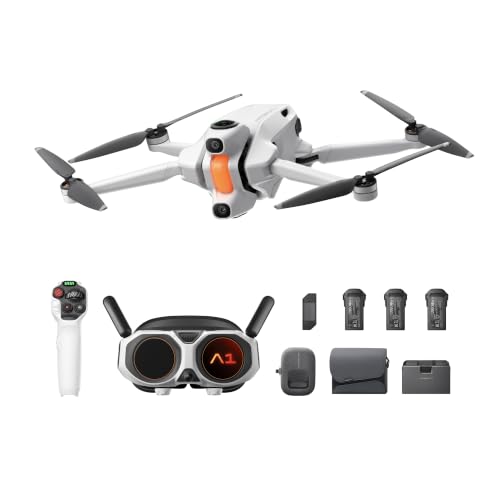
The Antigravity A1 Infinity takes a different approach to aerial cinematography. Rather than relying on a conventional forward-facing camera to determine the final composition during flight, a 360-degree camera workflow captures a spherical view that can be reframed during editing.
That approach can be useful for immersive travel videos, creative action sequences and productions where the editor wants to choose the viewing direction after the footage has been recorded. It also changes the filming process: the operator must consider stitching, reframing and the final delivery format rather than simply selecting a conventional camera angle.
The supplied product brief describes 8K 360-degree capture, motion-controlled operation, goggles and automated editing tools. Because I could not independently verify the exact Infinity package and its full specifications from an authoritative manufacturer source, those package-specific claims should be checked before publication. This is best evaluated as a specialized creative tool rather than a direct substitute for a conventional multi-lens cinema drone.
5 Key Features
- 360-degree capture workflow: Spherical footage can provide flexibility when choosing the final viewing direction, subject to the camera’s actual capture and stitching capabilities.
- Reframing in post-production: Editors can select the viewing direction after recording, which is useful when the final shot composition is not fully determined during flight.
- Immersive viewing concept: A compatible goggles-based workflow can help operators experience the scene from an immersive perspective. Confirm which goggles are included with the specific package.
- Motion-oriented control concept: A motion controller may offer an alternative to conventional stick-based piloting, depending on the exact system configuration.
- Editing-oriented capture workflow: Software tools designed for reframing and subject tracking can help streamline the process of turning spherical footage into conventional video clips, if supported by the current software.
Pros
- 360-degree capture opens up creative options beyond conventional forward-facing aerial video.
- Post-production reframing allows composition choices after the flight.
- An immersive viewing workflow may appeal to creators who prefer first-person visual feedback.
- The format is well suited to experimentation with unusual aerial perspectives.
Cons
- Reframed output may have less usable detail than the full spherical capture resolution suggests.
- The specialized workflow is less suitable for projects that require conventional lens selection and predictable framing from the outset.
Final Verdict
There is no single best professional drone for every cinematography project. The right choice depends on the kind of footage you deliver, how much camera flexibility you need and whether your workflow benefits more from conventional optical cameras or spherical capture.
- Best for flagship cinematography: DJI Mavic 4 Pro. Its high-resolution main camera, three-camera arrangement and rotating gimbal make it the most feature-rich conventional cinematography option in this comparison.
- Best for versatile commercial filming: DJI Mavic 3 Pro. Its three distinct optical focal lengths and four-thirds main sensor suit projects that require several compositions from a single aircraft.
- Best for travel and independent filmmaking: DJI Air 3S. Its compact design, dual cameras, internal storage and rated endurance make it a practical choice for location-based work.
- Best for adjustable exposure: Autel EVO II Pro 6K Drone. Its listed one-inch sensor and variable aperture appeal to operators who want more direct control over exposure.
- Best for immersive and experimental footage: Antigravity A1 Infinity. Its 360-degree workflow offers creative possibilities that conventional forward-facing camera systems do not provide in the same way.
Before buying, compare the exact model revision, included controller, battery bundle, recording formats and current local flight regulations. Manufacturer-rated range and flight time should not be interpreted as safe operating targets or guaranteed real-world results.
Best For Table
| Buyer Type / Scenario | Best Product | Why |
|---|---|---|
| High-end commercial cinematography | DJI Mavic 4 Pro | High-resolution main camera and rotating gimbal |
| Multi-focal-length aerial filmmaking | DJI Mavic 3 Pro | Three optical camera perspectives |
| Travel filmmaking and solo operation | DJI Air 3S | Compact aircraft with two cameras |
| Manual exposure control | Autel EVO II Pro 6K Drone | Adjustable aperture and high-resolution capture |
| Immersive aerial storytelling | Antigravity A1 Infinity | 360-degree capture and post-production reframing |
| Aerial still photography alongside video | DJI Mavic 3 Pro | Dedicated main and telephoto cameras |
| Reframing footage after the flight | Antigravity A1 Infinity | Spherical capture offers post-production viewpoint flexibility |
FAQs
1. What is the best professional drone for cinematography?
The DJI Mavic 4 Pro is a strong choice for filmmakers seeking a high-end conventional camera drone with a multi-camera setup and an advanced rotating gimbal. The DJI Mavic 3 Pro is also compelling when three optical focal lengths are particularly important. The best option depends on your required image format, shooting style and budget.
2. Is a larger camera sensor important for cinematic drone footage?
Yes, sensor size can influence image quality, noise performance and how much detail a camera captures in challenging light. However, sensor size alone does not determine the final result. Lens quality, exposure, color processing, recording format and post-production also matter.
3. Is 6K or 5.1K video better for professional filmmaking?
Both resolutions can produce detailed footage. Higher-resolution capture can give editors more room to crop or reframe, particularly when delivering 4K video. The best choice also depends on frame rates, color depth, compression, storage requirements and the final delivery format.
4. How much flight time do cinematographers need?
It depends on the location and complexity of the shot. Longer rated flight times can reduce the need for battery changes during a shoot, but actual flight time varies with wind, temperature, aircraft condition and flying style. Plan for safe battery reserves rather than assuming the maximum advertised time is fully usable.
5. Is a 360-degree drone better than a conventional camera drone?
Not for every project. A 360-degree drone is useful when immersive footage or post-production reframing is a priority. Conventional camera drones are generally a more straightforward fit when you need predictable framing, specific optical focal lengths and a conventional video workflow.
6. What should I check before buying a professional drone?
Check the exact aircraft model and package, camera specifications, supported recording formats, battery availability, controller compatibility, warranty terms, replacement-part availability and local flight restrictions. For commercial work, also consider your editing workflow, backup requirements and whether the footage meets the client’s delivery specifications.
Last update on 2026-10-25/Affiliate links / Images from Amazon Product Advertising API