Run for Health : The 5 Best Treadmill With Incline for Running (2026)
Choosing the best treadmill with incline for running means looking beyond maximum speed. The incline range, running deck size, cushioning, workout controls, and subscription requirements can all affect how well a treadmill fits your training routine.
An incline treadmill lets you add hill intervals, vary workout intensity, and prepare for routes with elevation changes without going outdoors. However, not every model offers the same balance of running performance, convenience, and price.
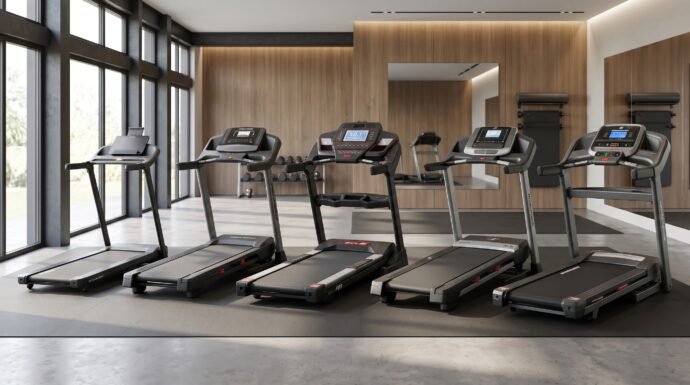
In this comparison, we look at five folding treadmills: the NordicTrack T6.5s, ProForm Carbon TLX, SOLE F80, Horizon Fitness 7.0 AT, and Echelon Stride. The goal is to help you decide which model best suits your running goals, available space, and preferred workout experience.
Table of Contents
At a Glance
| Treadmill | Key Features | Ideal Use Case |
|---|---|---|
| NordicTrack T6.5s | Up to 10 mph; reported 0–10% incline; folding design | Beginners and casual runners |
| ProForm Carbon TLX | Up to 12 mph; 0–12% incline; 20 × 60-inch belt; iFIT integration | Runners who want connected workouts |
| SOLE F80 | Up to 12 mph; 15 incline levels; 20 × 60-inch deck; 10.1-inch touchscreen | Regular runners seeking a feature-rich treadmill |
| Horizon Fitness 7.0 AT | Up to 12 mph; 0–15% incline; QuickDial controls; app connectivity | Interval training and steeper hill workouts |
| Echelon Stride | Reported up to 12 mph; reported up to 10% incline; compact folding design | Home runners with limited storage space |
Top 5 Best Treadmill With Incline for Running
1. NordicTrack T6.5s Treadmill

Overview
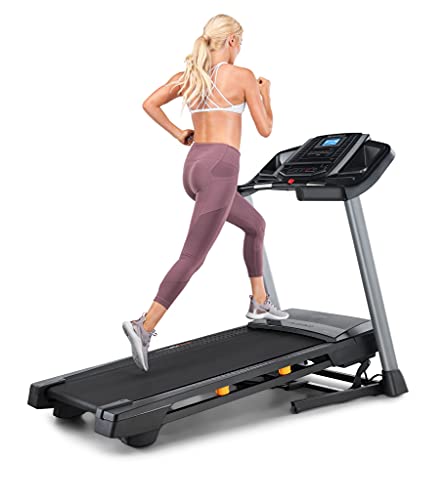
The NordicTrack T6.5s is an entry-level option for people who want to add incline training to their home running routine. Its reported 10 mph maximum speed and 0–10% incline range make it suitable for easy runs, brisk uphill walking, and moderate hill intervals.
The folding design is useful in homes where permanent floor space is limited. NordicTrack’s connected workout ecosystem is another attraction, although available features and membership requirements should be checked before purchase. This model makes the most sense for beginners and recreational runners who value straightforward training over a large selection of premium console features.
5 Key Features
- Up to 10 mph running speed: Suitable for easy and moderate running sessions, though faster runners may prefer a 12 mph model.
- Reported 0–10% incline range: Adds an uphill challenge for walking sessions and hill-focused workouts.
- Cushioned running deck: Designed to make repeated foot strikes more comfortable during home workouts.
- LCD workout display: Lets runners monitor basic workout information without relying entirely on a separate device.
- Folding frame: Helps reduce the treadmill’s floor footprint when stored upright.
Pros
- Accessible entry point for home incline training.
- Reported incline range supports basic hill workouts.
- Folding design suits smaller workout areas.
- Connected training options can add variety for guided sessions.
Cons
- A 10 mph top speed may limit faster interval training.
- Some connected workout features require a paid membership.
2. ProForm Carbon TLX Treadmill
Overview
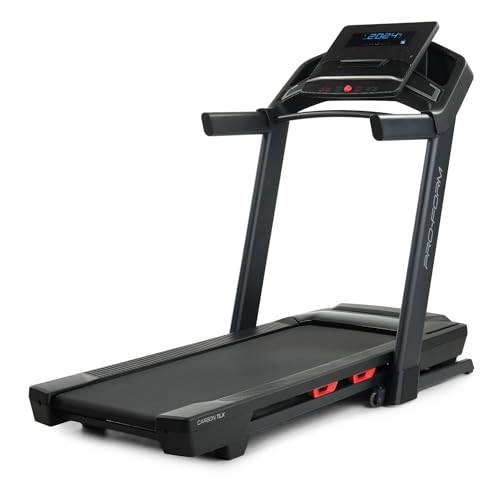
The ProForm Carbon TLX is a stronger fit for runners who want more speed and incline headroom than a basic entry-level treadmill offers. The manufacturer lists a maximum speed of 12 mph, a 0–12% incline range, a 20 × 60-inch running belt, and a 7-inch LCD display.
Its iFIT integration is the main differentiator. With the appropriate membership and connected device, workouts can automatically adjust treadmill speed and incline to follow a trainer’s session. ProShox cushioning, a folding frame, and a built-in workout fan round out the feature set.
This model suits recreational runners who want structured sessions, hill intervals, and the option to increase training intensity without moving to a premium treadmill.
5 Key Features
- Up to 12 mph speed: Offers more room for faster running and interval sessions than a 10 mph treadmill.
- 0–12% power incline: Supports a wider range of uphill workouts and progressive hill training.
- 20 × 60-inch running belt: Provides a full-length running surface for many home runners.
- iFIT connected training: Can automatically adjust speed and incline during supported trainer-led workouts; paid membership requirements apply.
- ProShox cushioning and folding design: Combines impact-absorbing deck cushioning with a frame that can be folded for storage.
Pros
- Higher top speed than the NordicTrack model described above.
- More incline headroom than a 10% incline treadmill.
- Full-length 60-inch belt for running.
- Guided workouts offer variety for users who enjoy structured training.
Cons
- The full connected workout experience requires a paid iFIT membership.
- The 7-inch display is an information screen rather than a large built-in entertainment touchscreen.
3. SOLE F80 Folding Treadmill

Overview
The SOLE F80 is a feature-rich folding treadmill aimed at people who expect to run regularly and want a more substantial home training setup. The current manufacturer listing specifies a 12 mph maximum speed, 15 incline levels, a 20 × 60-inch running surface, a 10.1-inch touchscreen, and a 350-pound user weight capacity.
Its main advantage is the combination of a full-size running deck, a wide range of incline settings, and a built-in touchscreen. SOLE also advertises its SOLE+ app without a monthly subscription, making it worth considering if you prefer not to depend on a paid training membership for basic connected workouts.
The F80 is best suited to regular runners who want a versatile treadmill for steady runs, incline sessions, and interval training. Its larger feature set comes with a higher purchase price and a substantial delivery footprint.
5 Key Features
- Up to 12 mph speed: Supports a range of training paces, including faster intervals.
- 15 incline levels: Provides multiple options for uphill training and varying workout difficulty.
- 20 × 60-inch running surface: Offers a spacious, full-length belt for running.
- 10.1-inch touchscreen and connectivity: Provides a built-in interface for workout information and supported entertainment or training features.
- 350-pound user capacity and folding frame: Combines a substantial stated capacity with a fold-up design for home storage.
Pros
- Spacious 20 × 60-inch running deck.
- Multiple incline settings for varied hill workouts.
- Built-in touchscreen reduces reliance on a phone or tablet for the main interface.
- SOLE+ is advertised without a monthly subscription.
Cons
- Higher upfront cost than the entry-level options in this comparison.
- Freight delivery and the treadmill’s substantial weight can make installation and relocation more demanding.
4. Horizon Fitness 7.0 AT Treadmill

Overview
The Horizon Fitness 7.0 AT is particularly appealing to runners who prioritize quick workout adjustments and a wide incline range. The manufacturer lists speeds from 0.5 to 12 mph, a 0–15% incline range, a 20 × 60-inch running area, and 3-Zone Variable Response Cushioning.
Its QuickDial controls are designed to make speed and incline changes convenient during interval training. Bluetooth connectivity also supports compatible fitness apps, including Peloton and Zwift, while the treadmill can connect with supported smartwatches and workout-tracking services.
Unlike treadmills that center the experience on a built-in touchscreen or a single paid training platform, the 7.0 AT emphasizes physical controls and the flexibility to use a personal device. That makes it a strong option for runners who already have a preferred app or training plan.
5 Key Features
- 0–15% incline range: Offers the highest stated maximum incline among these five models, making it useful for steeper hill sessions.
- Up to 12 mph speed: Supports a broad range of running workouts, from steady sessions to faster intervals.
- 20 × 60-inch running deck: Provides ample length and width for a typical running stride.
- QuickDial speed and incline controls: Helps runners make adjustments without navigating complicated menus.
- Bluetooth app connectivity and 3-Zone cushioning: Supports compatible training apps while the cushioned deck is designed to provide different responses across the stride.
Pros
- Highest stated incline range in this comparison.
- Quick controls are useful for changing intensity during intervals.
- Full-length 20 × 60-inch running deck.
- App connectivity gives runners flexibility in choosing training platforms.
Cons
- No large built-in touchscreen for displaying trainer-led classes.
- The treadmill’s substantial size and weight mean buyers should plan the installation space carefully.
5. Echelon Stride Smart Treadmill

Overview
The Echelon Stride stands out for its storage-focused design. The supplied script describes a treadmill with a maximum speed of 12 mph, a 10% maximum incline, a 20 × 55-inch running deck, and an auto-folding mechanism intended to make it easier to put away after workouts.
The shorter running deck is an important consideration. It may be adequate for many recreational runners, but people with longer strides should compare the available belt length carefully before purchasing. The exact features can also vary across products in Echelon’s Stride family, so verify that the Amazon listing corresponds to the version described here.
For someone who needs a treadmill that can be stored between sessions, the Stride’s main appeal is its compact folding approach rather than a class-leading incline range.
5 Key Features
- Reported speed up to 12 mph: Provides the speed range described in the supplied product script.
- Reported incline up to 10%: Allows uphill training in addition to flat running.
- Reported 20 × 55-inch running deck: A space-conscious running surface that buyers should assess against their stride length.
- Auto-folding design: Intended to make storage easier after exercise.
- Connected workout features: The supplied script describes Bluetooth connectivity, handlebar heart-rate sensors, and access to Echelon’s guided workout ecosystem; confirm which features are included with the exact model.
Pros
- Storage-focused folding design.
- Reported maximum speed supports a variety of recreational running sessions.
- Incline adjustment adds training variety.
- Connected workout options may appeal to runners who enjoy guided classes.
Cons
- The reported 55-inch belt is shorter than the 60-inch surfaces on the ProForm, SOLE, and Horizon models.
- Membership costs and the exact feature set should be checked for the specific version being sold.
Final Verdict
The best treadmill with incline for running depends on how you train, how much room you have, and whether you want built-in workout technology.
- Best for beginners: The NordicTrack T6.5s is worth considering if your main priorities are straightforward running, moderate incline workouts, and a folding design.
- Best for connected training: The ProForm Carbon TLX combines a 12 mph top speed and 12% incline with iFIT-guided workouts.
- Best for a premium home setup: The SOLE F80 offers a 20 × 60-inch running deck, a built-in touchscreen, and 15 incline levels without requiring a monthly subscription for SOLE+.
- Best for hill intervals: The Horizon Fitness 7.0 AT stands out with its 15% maximum incline and convenient QuickDial controls.
- Best for storage-conscious homes: The Echelon Stride is worth a look if its folding design fits your space, provided the exact model’s running deck and features meet your needs.
For runners who prioritize incline training, the Horizon 7.0 AT deserves particular attention because its stated 15% maximum incline exceeds the 10% and 12% ranges of the other models in this comparison. If you prefer an integrated touchscreen and a setup that does not depend on a paid workout subscription, the SOLE F80 is another strong candidate.
Before buying, verify the exact model, current price, warranty, delivery arrangements, and any required subscription on the seller’s listing.
Best For Table
| Buyer Type / Scenario | Best Product | Why |
|---|---|---|
| Beginner incline training | NordicTrack T6.5s | Straightforward feature set and folding design |
| Guided running workouts | ProForm Carbon TLX | iFIT integration and automatic workout adjustments |
| Premium home running setup | SOLE F80 | Built-in touchscreen and spacious running deck |
| Steeper hill intervals | Horizon Fitness 7.0 AT | 0–15% incline range |
| Storage-conscious home | Echelon Stride | Auto-folding design described in the supplied script |
| Runners who want a 60-inch belt | ProForm Carbon TLX, SOLE F80, or Horizon 7.0 AT | All three have a stated 20 × 60-inch running surface |
FAQs
1. What incline is best for running on a treadmill?
There is no single best incline for every runner. A flat setting is useful for steady-paced runs, while a moderate incline can add variety and help simulate uphill routes. Steeper settings are useful for dedicated hill workouts, but they increase workout difficulty. Start at a comfortable level and adjust gradually.
2. Is a 10% incline enough for running?
For many recreational runners, yes. A 10% maximum incline allows uphill walking, jogging, and hill intervals. Runners who specifically want steeper hill training may prefer a treadmill with a 12% or 15% maximum incline, such as the ProForm Carbon TLX or Horizon Fitness 7.0 AT.
3. Is a 12 mph treadmill fast enough for running?
A 12 mph maximum speed is sufficient for many recreational runners and supports a broad range of running paces and intervals. Whether it is enough depends on your training goals and preferred speed. Runners who regularly train at higher speeds should check their requirements before choosing a treadmill.
4. Is a 60-inch running belt better than a 55-inch belt?
A 60-inch belt offers more front-to-back space for running, which can be particularly useful at faster speeds or for runners with longer strides. A 55-inch belt may work for some users, but comfort depends on height, stride length, and running style. If possible, check the running area carefully before purchasing.
5. Do incline treadmills require a workout subscription?
Not always. Subscription requirements depend on the brand and the specific features you want to use. The ProForm Carbon TLX relies on a paid iFIT membership for its full connected workout experience. SOLE advertises its SOLE+ app without a monthly subscription. Check the current membership terms before buying either model.
6. What should I check before buying an incline treadmill for home use?
Look at the maximum speed and incline, running deck dimensions, cushioning, user weight capacity, folding mechanism, and available workout controls. Also check the treadmill’s assembled and folded dimensions, warranty, electrical requirements, delivery and assembly costs, and whether the features you want require a paid subscription.
Last update on 2026-10-25/Affiliate links / Images from Amazon Product Advertising API