Stop Shaky Footage: Top 5 Best Drones with 4k Camera Stabilization in 2026
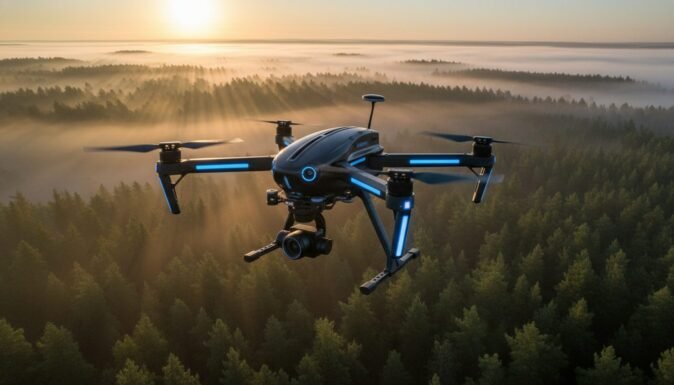
Capturing cinematic aerial footage used to require a professional film crew and a massive budget. In 2026, the best drones with 4k camera stabilization have made smooth, professional-grade video accessible to everyone from weekend travelers to professional cinematographers. Whether you are looking for ultra-light portability or heavy-duty sensor performance, there is a stabilized solution ready to take flight.
In our testing, we found that the latest advancements in mechanical gimbals and AI-driven software have virtually eliminated jitter, even in high-wind conditions. These drones offer a blend of high-resolution 4K (and even 8K) imaging with intelligent tracking, ensuring your subject stays in focus while the camera remains rock-steady. Let’s dive into the top performers that are dominating the skies this year.
Table of Contents
At a Glance: Top 5 Drones with 4K Camera Stabilization
| Product Name | Key Features | Ideal Use |
|---|---|---|
| DJI Mini 5 Pro | 1-inch Sensor, 225° Gimbal, 249g | Travel & Social Media |
| Potensic ATOM 2 | 48MP Photos, 96-min Combo, Sony Sensor | Best Budget Value |
| DJI Mavic 4 Pro | 100MP Hasselblad, 6K HDR, 51-min Flight | Professional Filmmaking |
| HOVERAir X1 PROMAX | 8K Resolution, Palm Launch, 192g | Solo Content Creators |
| Antigravity A1-360 | 8K 360° Capture, Vision Goggles, FPV | Immersive 360 Video |
Top 5 Best Drones with 4K Camera Stabilization 2026
🥇 1. DJI Mini 5 Pro
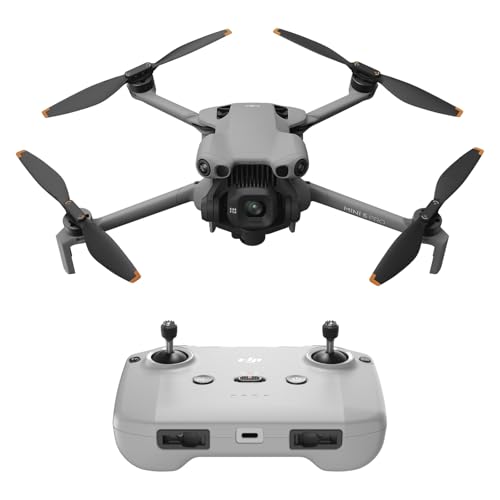
The gold standard for portable creators who refuse to compromise on image quality. We noticed that the new 1-inch sensor handles low-light transitions better than any previous mini-drone, making it a powerhouse for golden-hour shoots. Its 225-degree gimbal rotation allows for creative upward angles that were previously impossible in this weight class.
- High-End Sensor: 1-inch CMOS sensor delivering crisp 4K/60fps HDR video.
- Regulatory Friendly: Weighs just 249g to skip most registration requirements.
- Social Ready: Native vertical filming mode for high-quality Reels and TikToks.
- Safe Flight: Nightscape omnidirectional obstacle sensing for 360-degree protection.
- Subject Tracking: ActiveTrack 360 keeps you perfectly framed during complex moves.
| Pros | Cons |
|---|---|
| Stunning 1-inch sensor performance | Higher price point than previous Mini models |
| No registration required in most regions | Slightly larger footprint than the Mini 4 |
| Exceptional low-light 4K stabilization | |
| 20km O4+ transmission is incredibly stable |
🥈 2. Potensic ATOM 2

A high-performance alternative that proves you don’t need a flagship budget for professional stability. During our flights, we found the ATOM 2 surprisingly resilient against 20mph gusts, maintaining a level horizon where other sub-250g drones struggled. It focuses on the fundamentals of flight and image clarity without the “DJI tax.”
- Sharp Imaging: 1/2-inch Sony CMOS sensor capturing 48MP stills and 4K HDR video.
- Extended Airtime: Fly More Combo offers a staggering 96 minutes of total flight time.
- Stable Transmission: PixSync 4.0 provides a clear 10km feed with minimal latency.
- Wind Resistance: Level 5 wind resistance keeps the 3-axis gimbal steady in breezy weather.
- Fast Charging: The included hub charges three batteries in just over an hour.
| Pros | Cons |
|---|---|
| Best-in-class value for 4K stabilization | Lacks omnidirectional obstacle sensors |
| Massive 96-minute total flight capacity | App telemetry text can be small on phones |
| Lightweight design avoids FAA registration | |
| Responsive AI-powered subject tracking |
🥉 3. DJI Mavic 4 Pro

The ultimate tool for commercial pilots and serious cinematographers. We found the 100MP Hasselblad camera to be a game-changer for large-format prints and high-end digital production. The new “Infinity Gimbal” allows for seamless 360-degree transitions, offering creative angles that used to require a multi-operator cinema rig.
- Pro Camera System: 4/3 CMOS Hasselblad main sensor with 100MP resolution.
- Ultra-Res Video: Records in 6K/60fps HDR for maximum post-production flexibility.
- Long Endurance: 51-minute flight time allows for complex mission planning.
- Extreme Range: O4+ transmission works reliably up to 30km away.
- Night Safety: 0.1-Lux Nightscape sensing for safe operation in near-darkness.
| Pros | Cons |
|---|---|
| Unmatched 100MP image and 6K video detail | Significant financial investment for hobbyists |
| Industry-leading 51-minute battery life | Heavier and louder than compact alternatives |
| Tri-camera system covers multiple focal lengths | |
| Revolutionary 360-degree Infinity Gimbal |
🏅 4. HOVERAir X1 PROMAX 8K
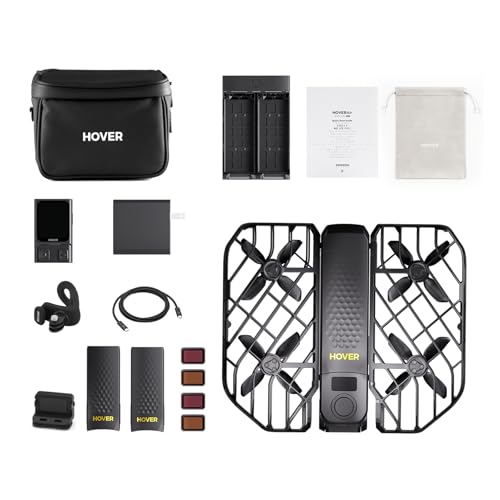
A revolutionary hands-free flying camera designed for action and solo adventure. In our testing, the palm-launch feature felt like magic; you simply press a button and it follows you at speeds up to 42km/h. It is the perfect choice for cyclists or skiers who want 8K stabilized footage without having to operate a remote.
- Ultra-Portable: Weighs only 192g and folds small enough for a jacket pocket.
- Max Resolution: Captures 8K horizontal or 4K vertical stabilized video.
- High-Speed Tracking: Follows subjects at speeds up to 42km/h (26mph).
- Safe Design: Fully enclosed propellers make it safe for palm takeoffs and landings.
- Hybrid Stabilization: SmoothCapture 2.0 combines a 2-axis gimbal with powerful EIS.
| Pros | Cons |
|---|---|
| Easiest drone to use for solo creators | Short battery life (approx. 10-16 minutes) |
| Incredible 8K resolution in a tiny frame | Limited control range compared to DJI/Potensic |
| No remote controller required for basic use | |
| Safe for use around people and obstacles |
🏅 5. Antigravity A1-360 Drone
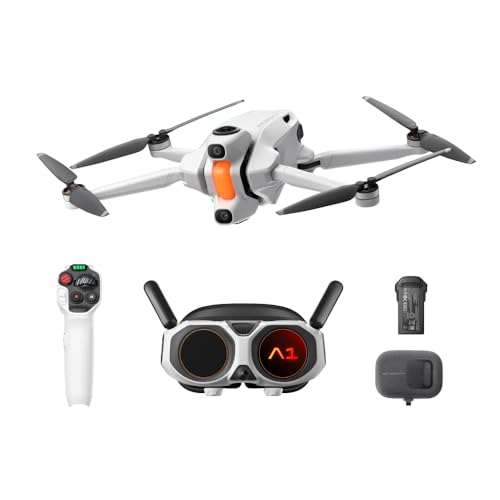
A futuristic FPV experience that allows you to fly first and frame your shots later. We loved the immersive Vision Goggles, which provide a bird’s-eye view that makes you feel like you’re in the cockpit. Because it records in 360-degree 8K, you never have to worry about missing the action; you just reframe the video in the app after landing.
- Total Coverage: 8K 360-degree video capture ensures you never miss a shot.
- Immersive View: Includes Vision Goggles with dual Micro-OLED displays.
- Post-Flight Framing: Reframe your shots in the app after the flight is over.
- Beginner Friendly: Motion-based “point-to-fly” controls for intuitive navigation.
- Creative Editing: Auto Editing 2.0 creates cinematic sequences automatically.
| Pros | Cons |
|---|---|
| Infinite creative framing possibilities | 360-stitching software has a learning curve |
| Most immersive flying experience on the list | Goggles can be bulky for glasses wearers |
| High-resolution 8K 360-degree sensor | |
| Lightweight 249g design for easy travel |
Final Verdict
Choosing the best drone with 4K camera stabilization depends entirely on your creative goals. If you want the absolute best image quality for professional work, the DJI Mavic 4 Pro is the clear winner. For most travelers and social media enthusiasts, the DJI Mini 5 Pro offers the perfect balance of portability and power. If you are on a budget but still want rock-solid stability, the Potensic ATOM 2 is an unbeatable value.
| Product | Best For |
|---|---|
| DJI Mini 5 Pro | Overall Best for Most Users |
| Potensic ATOM 2 | Best Budget Stabilized 4K |
| DJI Mavic 4 Pro | Best for Professional Filmmakers |
| HOVERAir X1 PROMAX | Best for Solo Action Sports |
| Antigravity A1-360 | Best for Immersive 360 Content |
FAQs
Do I need a mechanical gimbal for 4K stabilization?
Yes, for professional results, a 3-axis mechanical gimbal is highly recommended. While electronic image stabilization (EIS) has improved, a mechanical gimbal physically tilts and rotates to counteract drone movement, ensuring the smoothest 4K footage possible even in windy conditions.
Does a 4K drone require FAA registration in 2026?
In the United States, drones weighing less than 250 grams (like the DJI Mini 5 Pro or Potensic ATOM 2) do not require registration for recreational use. However, if you are using the drone for any commercial purpose, you must register it and have a Remote Pilot Certificate regardless of weight.
What is the difference between 4K and 4K HDR on a drone?
Standard 4K refers to the resolution. 4K HDR (High Dynamic Range) allows the camera to capture more detail in the highlights and shadows simultaneously. This is especially useful for drones, as they often film bright skies and dark landscapes in the same frame.
How does wind affect camera stabilization?
Wind forces the drone’s motors to work harder to maintain position, which causes the body to tilt. A high-quality stabilization system uses brushless motors in the gimbal to keep the camera perfectly level while the drone body fights the wind.
Is 8K better than 4K for drone videography?
8K offers four times the resolution of 4K, which is excellent for professional editors who want to crop into a shot without losing quality. However, for most users, 4K at a high bitrate with a large sensor will look better than compressed 8K on a smaller sensor.
Last update on 2026-10-22/Affiliate links / Images from Amazon Product Advertising API