
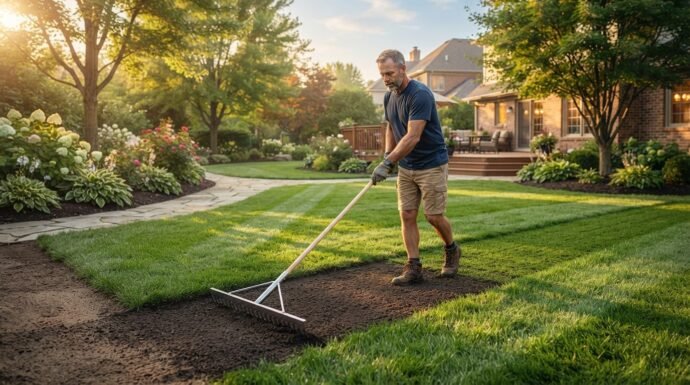
Best Lawn Leveling Rake for Yard: 5 Picks (2026)
Short answer: the best lawn leveling rake for yard work for most homeowners is the Rocklin 30 x 10 in. stainless steel rake, from an established lawn-leveling tool brand. All five rakes here do the same basic job, so the real choice is plate width and handle length: pick the 45 in. wide model for large, open lawns.
Table of Contents
- How we chose
- Quick comparison
- 1. Rocklin Lawn Leveling Rake
- 2. Dremmt Lawn Leveling Rake
- 3. BlumeTrec 7 ft Leveling Rake
- 4. 45 in. Lawn Leveling Rake with Adjustable Handle
- 5. 30 x 10 in. Stainless Leveling Rake with 78 in. Handle
- How to choose a lawn leveling rake for yard work
- Mistakes to avoid
- FAQ
- Verdict by buyer type
- Related guides
How we chose
We compared these rakes from manufacturer specs and Amazon listings: plate size and material, handle length and adjustability. We did not level lawns with them ourselves, so sizes are listed figures.
Most of these rakes share the same 30 x 10 in. plate design, so we focused on the differences that change your work: width, handle and build. Leveling advice below follows common lawn-care guidance, such as from university extension services.
Quick comparison
| Rake | Plate (listed) | Handle (listed) | Best for |
|---|---|---|---|
| Rocklin | 30 x 10 in. stainless | Long handle | Most lawns |
| Dremmt | 30 x 10 in., stainless handle | Long handle | Heavy-duty use |
| BlumeTrec | 30 x 10 in. steel | 7 ft | Long reach |
| 45 in. leveling rake | 45 in. wide | 78 in. adjustable | Large open lawns |
| 30 x 10 in. stainless (budget) | 30 x 10 in. stainless | 78 in. | Small yards, low cost |
1. Rocklin Lawn Leveling Rake

Who it is for: most homeowners leveling low spots and topdressing after aeration.
Key facts: listed with a 30 x 10 in. stainless steel ground plate for leveling soil, sand or dirt surfaces, from a brand known for this tool.
Drawbacks: a 30 in. plate means many passes on a large lawn. Stainless plates still need rinsing after wet sand or compost.
Skip it if: you have a big, open lawn. A wider plate saves time.
2. Dremmt Lawn Leveling Rake

Who it is for: buyers who want a heavy-duty build for regular topdressing.
Key facts: listed with a 30 x 10 in. plate and a stainless steel handle, described as professional-grade and heavy duty.
Drawbacks: very similar to the others in size, so you are paying for build rather than coverage. A heavier tool is more tiring over long sessions.
Skip it if: you only level a few small patches a year.
3. BlumeTrec 7 ft Leveling Rake
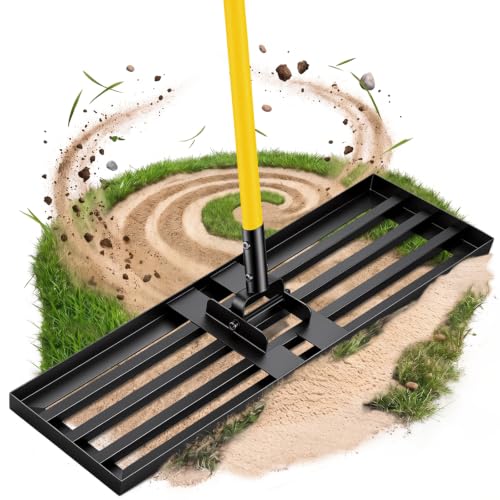

Who it is for: people who want long reach for spreading sand, compost or gravel without stepping on the lawn.
Key facts: listed with a 30 x 10 in. steel head and a 7 ft handle, for soil, compost, gravel and lawn leveling.
Drawbacks: a long handle is harder to control in tight beds and around obstacles. Steel parts need drying to avoid rust.
Skip it if: you work mainly in small, tight areas.
4. 45 in. Lawn Leveling Rake with Adjustable Handle
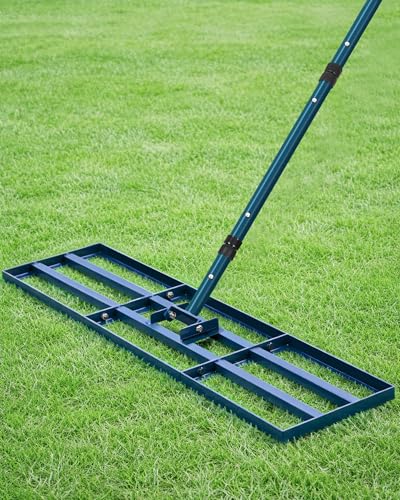
Who it is for: large, open lawns where fewer passes matter.
Key facts: listed with a 45 in. wide head, the widest here, and a 78 in. adjustable handle.
Drawbacks: a wide plate is heavier to push through thick sand and harder to use near beds and edges. The brand is not clearly named in the listing.
Skip it if: your lawn has lots of beds, trees or narrow strips.
5. 30 x 10 in. Stainless Leveling Rake with 78 in. Handle

Who it is for: small yards and occasional leveling on a budget.
Key facts: listed with a 30 x 10 in. stainless steel plate and a 78 in. handle.
Drawbacks: little is listed beyond size, and brand support is unclear. Check handle joints are tight before use.
Skip it if: you level often and want a known brand.
How to choose a lawn leveling rake for yard work
- Plate width. 30 in. suits most yards; 40 in. or wider saves passes on big, open lawns.
- Handle length. Around 72-84 in. lets you work upright and reach across beds.
- Material. Stainless plates resist rust from wet sand and compost.
- Layer depth. Plan to spread about 1/4-1/2 in. at a time so grass blades still show through.
- Timing. Level when grass is actively growing, ideally after aeration.
Mistakes to avoid
- Burying grass under too thick a layer, which can smother it.
- Using heavy clay soil to fill dips instead of sand or a sandy topsoil mix.
- Leveling during dormancy, when grass cannot grow back through.
- Pushing down hard instead of letting the plate glide.
- Skipping watering after spreading, which leaves material sitting on top.
FAQ
When is the best time to level a lawn?
Level when the grass is actively growing, usually late spring to early summer for warm-season grass and early fall for cool-season grass. Mowing short and aerating first helps the material settle into the soil. Avoid leveling during drought or dormancy, when grass cannot recover.
What should I use to level my lawn?
Many people use washed sand or a mix of sand and topsoil or compost. Sand spreads and settles evenly, while compost adds organic matter. Avoid heavy clay soil. Match what you use to your existing soil where possible to avoid drainage layers.
How deep can I fill low spots at once?
A common guideline is about 1/4-1/2 in. per application so the grass blades still poke through. Deeper dips need several rounds a few weeks apart, or lifting the sod, filling under it and laying it back down.
Does a wider leveling rake work better?
A wider plate covers more ground per pass, which helps on large, open lawns. It is heavier to push and harder to use near beds, trees and edges. For most yards, a 30 in. plate is a good balance of speed and control.
Verdict by buyer type
The best lawn leveling rake for yard work depends on lawn size:
- Best overall: Rocklin 30 x 10 in.
- Heavy-duty build: Dremmt.
- Longest reach: BlumeTrec 7 ft.
- Large open lawns: 45 in. wide rake.
- Small yards on a budget: 30 x 10 in. with 78 in. handle.
Related guides
- Best lawn aerator shoes for home use
- Best broadcast spreaders for fertilizer
- Best walk-behind seeders
- Best manual sod cutters
- Best zero turn mowers for large yards
Last update on 2026-11-17/Affiliate links / Images from Amazon Product Advertising API





One Comment