Hear Every Detail: Top 12 Best Wired Headphones of 2026
If you’re thinking about upgrading your audio setup with something powerful, reliable, and consistent, you are in the right place. While Bluetooth earbuds are great for the gym, nothing beats the uncompressed, zero-latency fidelity of a great pair of wired headphones.
Today, we’re covering the top 12 best wired headphones of 2026. We’ve chosen these legendary sets for their incredible sound quality, comfort during long listening sessions, and proven long-term durability. Whether you are mixing a track, gaming, or just enjoying your favorite albums, let’s find the perfect pair for you!
Table of Contents
Compare our top picks side by side, including current prices and ratings:




The 12 Best Wired Headphones Reviews
1. Audio-Technica ATH-M50x
Best For: Supreme Versatility, Gamers, and DJs
We’re starting with an absolute industry standard: the Audio-Technica ATH-M50x. These headphones are everywhere for a reason. Packing proprietary 45mm large-aperture drivers, they deliver outstanding clarity across the board with deep, controlled bass that never gets messy or muddy.
- Design: Closed-back design offers solid passive noise isolation for loud offices or studio tracking.
- Flexibility: Features 90-degree swiveling earcups for quick one-ear monitoring.
- Convenience: Comes with three different detachable cables in the box to suit any desk or studio setup.
- Drawbacks: While the build is generally tank-like, the faux-leather headband material can begin to wear down and flake after years of daily abuse.
2. beyerdynamic DT 770 PRO
Best For: Epic Gaming Sessions and Maximum Comfort
Built like a tank in Germany, the beyerdynamic DT 770 PRO headphones are legendary in the audio world for their comfort. The standout feature is the incredibly soft, replaceable velour ear pads. Honestly, they feel like clouds on your head, making them a top pick for marathon gaming or recording sessions.
- Sound Profile: An integrated bass reflex system gives you a punchy low end without distorting the mids or highs.
- Soundstage: Experts praise them for having a surprisingly wide soundstage for a closed-back design, allowing gamers to pinpoint footsteps with ease.
- Durability: Metal-reinforced headband ensures extra strength.
- Drawbacks: The cable is not detachable, and the plug can break if you are too rough with it.
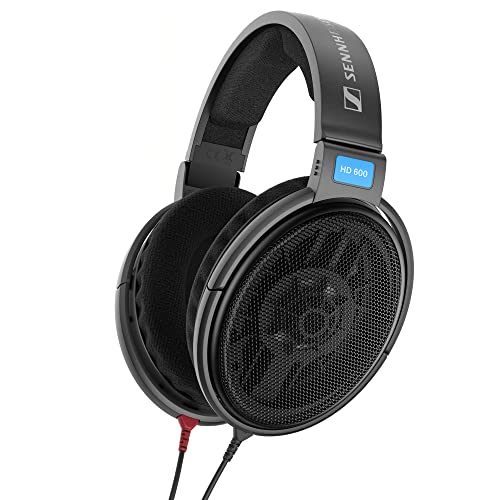
3. Sennheiser HD 600 Headphone
Best For: Critical Listening and Audiophiles
If you want total transparency, the Sennheiser HD 600 is the benchmark for audiophiles and professional mixers. These feature an open-back design, meaning air and sound flow freely through the metal mesh covers. This creates a spacious, realistic soundstage that feels like you’re sitting in the room with the band.
- Precision Engineering: Utilizes advanced aluminum voice coils and neodymium magnets for surgical precision.
- Sound Signature: It’s not about “fun” boosted bass; it’s about hearing exactly what’s in the recording with absolute realism.
- Comfort: Lightweight build and plush pads make them disappear on your head.
- Note: Because they are open-back, they offer zero noise isolation. You will hear your environment, and people next to you will hear your music.
4. Sony MDR7506 Professional Headphone

Best For: Field Recording and Broadcast Work
The Sony MDR7506 is a stone-cold classic. You’ve probably seen these in almost every radio station and recording studio for the last thirty years. The design is simple, functional, and highly dependable, folding up into a compact shape for easy travel.
- Sound Profile: 40mm drivers and neodymium magnets provide a detailed, flat response that is never “boomy.”
- Cable: Comes with a heavy-duty 9.8-foot coiled cable, making them a favorite for moving around a studio without snagging a wire.
- Fit: Very light and secure, providing effective passive isolation for tracking vocals.
- Drawbacks: The earpads are notorious for flaking and falling apart after a year or two of heavy use, though they are very cheap and easy to replace.
5. Sennheiser HD 280 Pro Headphone

Best For: Podcasters and Extreme Noise Isolation
The Sennheiser HD 280 Pro is built for one main thing: isolation. The closed-back design and snug clamping force block out a massive amount of ambient noise, making them a staple for podcasters and recording engineers who need to focus in loud environments without their headphone audio bleeding into their microphones.
- Sound Signature: Clean and linear without any fake bass boosts—just the truth of the audio.
- Portability: Features rotating earcups and a folding design.
- Isolation: Thick padding creates a tight seal to keep the world out.
- Drawbacks: The fit is definitely on the snug/tight side, which can cause fatigue for people with larger heads. Some users also report plastic parts breaking early on.
6. Sennheiser HD 599SE
No products found.
Best For: Relaxed, Long Home Listening Sessions
The Sennheiser HD 599SE is the pair to grab when you want open-back spaciousness without the amp-hungry demands of the HD 600. Its angled transducers (Sennheiser’s E.A.R. design) direct sound toward your ears for a natural, speaker-like presentation, and at just 50 ohms it runs happily from a laptop or phone. The tuning is smooth and slightly warm, which makes it perfect for unwinding with albums or movies.
- Design: Open-back construction with plush velour ear pads for a roomy, airy soundstage.
- Convenience: Ships with two detachable cables (3.5mm and 6.3mm) for both portable and hi-fi setups.
- Efficiency: Low 50-ohm impedance means you don’t need a dedicated headphone amplifier.
- Drawbacks: Like all open-backs it leaks sound, and the mostly plastic build feels less premium than the price suggests.
7. AKG K371
Best For: Portable Studio Monitoring and Creators on the Move
The AKG K371 packs a studio-grade closed-back tuning into a foldable frame that slips easily into a backpack. AKG voiced it close to the Harman research target curve, so you get a punchy, extended low end with clear, natural mids, a rare combination for closed-back headphones. Its 50mm titanium-coated drivers and 32-ohm impedance make it easy to drive from any audio interface or phone.
- Design: Closed-back oval ear cups create a good seal for tracking vocals or blocking out noise.
- Portability: Fully foldable design for compact storage and travel.
- Convenience: Detachable, locking cable system with multiple cables included in the box.
- Drawbacks: The pads can get warm during long sessions, and the cups are a little shallow for larger ears.
8. Audio-Technica ATH-M40x

Best For: Accurate Mixing on a Budget
Think of the ATH-M40x as the M50x’s more honest sibling. It uses 40mm drivers tuned for a flatter, more neutral response, which makes it a favorite for mixing, editing, and transcription work where you need to hear mistakes rather than flattering bass. You still get the same tough build and swiveling earcups, just at a lower price.
- Sound: Flat, monitor-style tuning ideal for mixing, podcast editing, and transcription.
- Flexibility: 90-degree swiveling earcups make one-ear monitoring easy.
- Convenience: Includes both coiled and straight detachable cables.
- Drawbacks: Bass lovers may find it a bit lean, and the ear pads are on the shallow side.
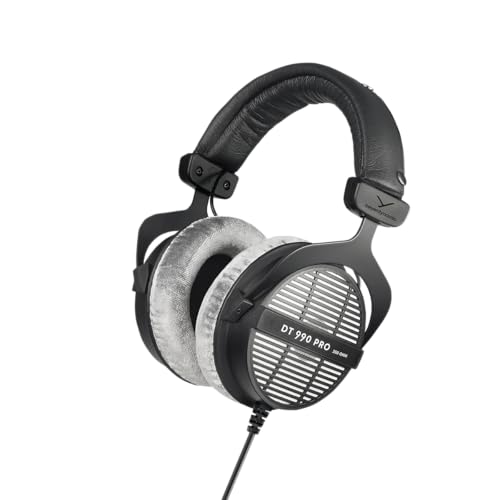
9. beyerdynamic DT 990 PRO
Best For: Open-Back Mixing and Competitive Gaming
The open-back cousin of the DT 770 PRO, the DT 990 PRO trades isolation for a wide, airy soundstage that makes footsteps and positional cues easy to pinpoint in games. It keeps the famous velour pads and spring-steel headband, so all-day comfort is a given. Just note that the 250-ohm version really benefits from a headphone amp or a decent audio interface.
- Design: Open-back construction delivers a spacious, speaker-like soundstage.
- Comfort: Soft, replaceable velour ear pads stay cool during long sessions.
- Durability: Built in Germany with a sturdy, serviceable design that lasts for years.
- Drawbacks: The treble is bright and can be fatiguing for some listeners, and the coiled cable is not detachable.
10. HIFIMAN Sundara
No products found.
Best For: Entry-Level Planar Magnetic Sound
The HIFIMAN Sundara is the easiest way into planar magnetic headphones. Instead of a traditional cone driver, an ultra-thin diaphragm is driven across its entire surface, giving lightning-fast transients, very low distortion, and remarkably tight bass. It’s an open-back design with a detailed, neutral-leaning tuning that rewards high-quality recordings.
- Sound: Planar magnetic driver delivers fast, detailed, low-distortion audio.
- Design: Open-back with a durable metal headband and comfortable pads.
- Convenience: Detachable dual-sided 3.5mm cables are easy to replace or upgrade.
- Drawbacks: Heavier than most dynamic headphones, and it sounds its best with a dedicated amplifier.
11. Philips SHP9600
Best For: Budget Audiophiles and First-Time Upgraders
The Philips SHP9600 is the successor to the cult-favorite SHP9500, and it remains one of the best “first audiophile headphones” you can buy. At a budget-friendly price, you get a true open-back design with 50mm drivers, a natural midrange, and a surprisingly wide soundstage, with deeper ear pads and a fuller low end than its predecessor. Its light weight also makes it a comfortable choice for long gaming marathons.
- Value: Genuine open-back audiophile sound for a fraction of the usual cost.
- Comfort: Lightweight frame with breathable, deep ear pads for long sessions.
- Convenience: Detachable 3.5mm cable that’s easy to replace.
- Drawbacks: Bass is still on the lighter side compared to closed-backs, and the plastic build feels basic.
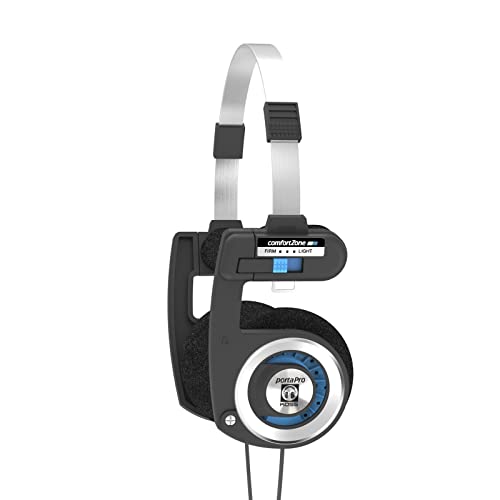
12. Koss Porta Pro
Best For: Portable Everyday Listening
First launched in 1984, the Koss Porta Pro is a cult classic that still earns its place today. These lightweight on-ear headphones fold small enough to fit in a pocket, deliver a fun, warm sound with surprising bass, and include Koss’s “Comfort Zone” setting so you can adjust the clamping pressure. Backed by Koss’s limited lifetime warranty, they’re the ultimate grab-and-go pair.
- Portability: Folds down compactly and weighs next to nothing.
- Comfort: Adjustable Comfort Zone setting lets you fine-tune the pressure on your ears.
- Warranty: Covered by Koss’s limited lifetime warranty.
- Drawbacks: The open design leaks sound, the cable is not detachable, and the retro look isn’t for everyone.
Final Verdict
If you are looking for the safest, most versatile bet that handles everything from gaming to professional editing with deep bass, the Audio-Technica ATH-M50x is our top overall pick. For pure comfort during 8-hour gaming sessions, the velour pads of the beyerdynamic DT 770 PRO are unmatched. However, if you are a true audiophile sitting in a quiet room looking for a lifelike soundstage, the open-back Sennheiser HD 600 is a masterpiece.
On a tighter budget, the Philips SHP9600 and Audio-Technica ATH-M40x punch well above their price, while the HIFIMAN Sundara is the best stepping stone into planar magnetic sound. And if you need something you can toss in a bag, the AKG K371 (for studio work) and the Koss Porta Pro (for everyday listening) are hard to beat.
Frequently Asked Questions (FAQs)
1. What is the difference between Open-Back and Closed-Back headphones?
Closed-back headphones (like the ATH-M50x) have solid plastic or metal outer earcups that seal the sound in and block outside noise out. They are great for commuting and recording. Open-back headphones (like the Sennheiser HD 600) feature grills or mesh on the outside, allowing air and sound to pass right through. This creates a much wider, more natural “3D” sound, but they leak audio and provide no noise isolation.
2. Do I need a headphone amplifier?
It depends on the “impedance” (measured in Ohms) of the headphones. Most consumer headphones (like the ATH-M50x or Sony MDR7506) have low impedance and can be driven perfectly by a laptop or smartphone. High-impedance audiophile headphones (like the 300-Ohm Sennheiser HD 600) require a dedicated headphone amplifier to reach proper volume levels and sound their best.
3. Why choose wired headphones over wireless Bluetooth ones?
Wired headphones provide uncompressed, zero-latency audio, making them essential for video editing, music production, and competitive gaming. Furthermore, wired headphones never need to be charged, and they often last for decades because they don’t rely on internal lithium-ion batteries that eventually degrade and die.
Last update on 2026-11-01/Affiliate links / Images from Amazon Product Advertising API