
From Tactical Gear to Backyard Spotting: The 5 Best Night Vision Monocular
Navigating the outdoors after the sun goes down requires more than just a standard flashlight. Whether you are tracking wildlife, securing your property, or heading out on a tactical nighttime patrol, finding the best night vision monocular can completely change how you experience the dark. Modern options span from military-grade analog systems to highly sensitive digital sensors and pocket thermal scanners.
In our hands-on testing, we evaluated these devices based on visual clarity, refresh rates, build quality, and real-world battery performance. Below, we break down the top five night vision monoculars on the market to help you choose the perfect match for your budget and environment.
Table of Contents
At a Glance: Top 5 Night Vision Monoculars
| Product Name | Key Features | Ideal Use |
|---|---|---|
| AGM Global Vision PVS-14 NL1 | Gen 2+ Level 1 IIT, Manual Gain, 50-Hour Run Time | Tactical Operations & Professional Search & Rescue |
| RIX K2 Portable Thermal | 256×192 Thermal Sensor, 50Hz Refresh Rate, EIS | Close-Range Game Recovery & Scouting (up to 150 yards) |
| GOYOJO GNG2K Digital | 2K Resolution, 60Hz Refresh Rate, 940nm Covert IR | Nighttime Boating, Hunting, & Fluid Tactical Scouting |
| YUANZIMOO LG66 Head-Mounted | 850nm IR, 8x Digital Zoom, Hands-Free Head Strap | Hands-Free Backyard Spotting & Entry-Level Exploring |
| YUANZIMOO Standard Digital | 1.5-inch LCD, 8x Zoom, Included Mini Tripod | Stationary Backyard Surveillance & Home Defense |
Top 5 Best Night Vision Monoculars 2026
🥇 1. AGM Global Vision PVS-14 NL1
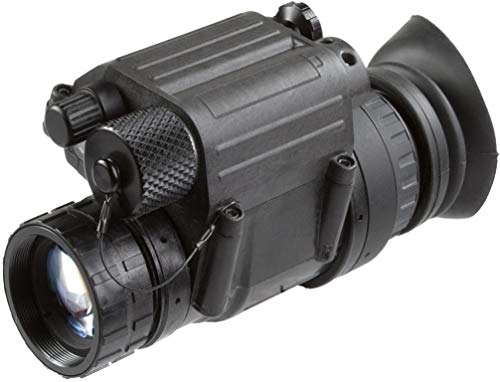

The absolute gold standard for military-grade, lag-free analog night vision performance. During our field testing, the AGM Global Vision PVS-14 NL1 blew us away with its genuine Gen 2+ Level 1 image intensifier tube. Unlike digital options that process images on a screen, this true analog device delivers a crisp, instantaneous green phosphor view with zero electronic latency. Running on a single AA battery for up to 50 hours, it features essential tactical controls like manual gain adjustment and an automatic bright-light shut-off to protect your tube from damage.
- True Gen 2+ Level 1 IIT: Delivers professional-grade, high-definition optical amplification.
- Manual Gain Control: Allows you to adjust brightness on the fly to match ambient light conditions.
- 50-Hour Battery Life: Phenomenal run time operating on just a single, readily available AA battery.
- Bright-Light Cut-Off: Built-in safety sensor automatically shuts down the unit to prevent tube damage.
- Tactical Reliability: Waterproof, ruggedized housing built to withstand severe environmental abuse.
| Pros | Cons |
|---|---|
| Lag-free, instantaneous real-time analog viewing | Included head mount is uncomfortable and front-heavy |
| Exceptional light gathering without needing an active IR | Buying from unauthorized sellers risks lower-spec tubes |
| Incredible 50-hour run time on one AA battery | |
| Professional manual gain and bright-light protection |
🥈 2. RIX K2 Portable Thermal Monocular

An ultra-lightweight, pocket-sized thermal scanner that detects hidden heat signatures instantly. Weighing in at a mere 200 grams, the RIX K2 is lighter than most modern smartphones and slips easily into a jacket pocket. We found it to be a game-changer for close-range scanning up to 150 yards, where it easily registers fresh thermal signatures from game, footprints, or even warm biological traces. The 50Hz refresh rate and Electronic Image Stabilization (EIS) ensure that your image remains fluid and clear while walking or scanning quickly.
- 256×192 Thermal Sensor: Highly sensitive sensor detects minuscule temperature variations (<25mK NETD).
- 50Hz Refresh Rate & EIS: Delivers buttery-smooth video and eliminates hand-shake blur.
- Integrated Sliding Lens Cover: Clever built-in slide protector ensures you will never lose your lens cap.
- Weighs Just 200 Grams: Extremely compact footprint makes it the ultimate everyday carry (EDC) scout tool.
- Replaceable 18650 Battery: Simple to swap out cells in the field for continuous operation.
| Pros | Cons |
|---|---|
| Incredibly lightweight and pocket-friendly design | Image gets fuzzy and pixelated beyond 200 yards |
| 50Hz display with stabilization prevents motion sickness | Menu interface can be difficult to navigate in the dark |
| Detects heat signatures that standard infrared misses | |
| Built-in sliding lens cap is incredibly practical |
🥉 3. GOYOJO GNG2K Night Vision Monocular
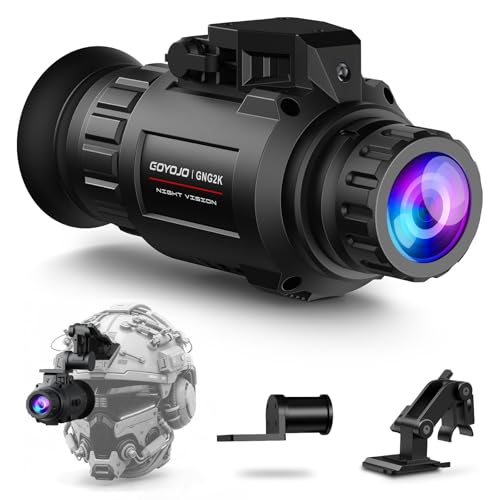
The ultimate high-performance digital monocular featuring fluid 2K resolution and stealth infrared. If you want near-analog fluid movement without spending thousands, the GOYOJO GNG2K is a masterclass in digital engineering. It boasts an ultra-sensitive 0.0001 Lux sensor that pulls in ambient starlight without any IR help. When total darkness hits, its covert 940nm infrared illuminator lights up the terrain up to 300 meters away without emitting any visible red glow. The wide 45-degree field of view provides excellent peripheral awareness for navigating tight spaces.
- 2K Resolution & 60Hz Refresh Rate: Provides razor-sharp digital images with zero motion lag.
- 0.0001 Lux Ultra-Sensitive Sensor: Captures clear, natural-looking images under basic starlight.
- Covert 940nm IR Illuminator: Completely invisible to the naked eye of both humans and animals.
- Wide 45° Field of View: Significantly wider than standard digital monoculars for better navigation.
- Four Color Modes: Easily switch between Night Green, Black & White, White Phosphor, and Color.
| Pros | Cons |
|---|---|
| Fluid 60Hz refresh rate eliminates digital motion blur | External battery charger is slightly inconvenient |
| Covert 940nm IR has zero visible red glow | Digital zoom loses clarity at the maximum 4x setting |
| Exceptional starlight performance without active IR | |
| Included helmet mount and dual rechargeable batteries |
🏅 4. YUANZIMOO LG66 Head-Mounted Monocular
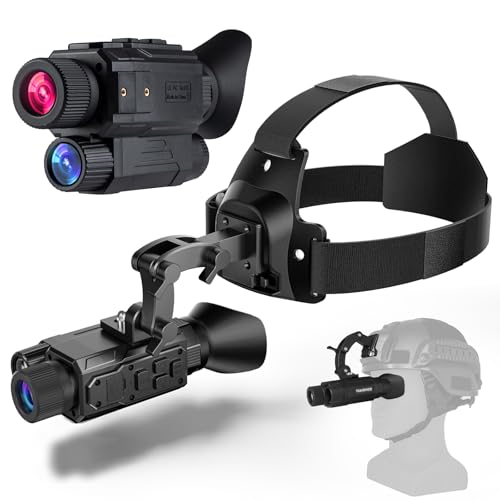
A budget-friendly, hands-free digital monocular perfect for casual nighttime exploration. The YUANZIMOO LG66 is designed for those who want to experience hands-free night vision without a massive financial investment. It features an adjustable 850nm IR illuminator and a built-in 2200mAh rechargeable battery that charges quickly via USB. While it captures decent photos and videos onto its included 32GB memory card, we noticed that its narrow field of view makes it perform more like a fixed-zoom spotter than a wide navigation tool.
- Hands-Free Head Strap: Includes an elastic head mount for basic hands-free operation.
- 850nm IR with 7 Levels: Provides active illumination up to 984 feet in absolute darkness.
- Built-in 2200mAh Battery: Rechargeable via Type-C with an automatic power-saving shut-off.
- Photo & Video Capture: Saves high-resolution media directly to the included 32GB microSD card.
- 8x Digital Zoom: Allows you to zoom in on distant objects during stationary spotting.
| Pros | Cons |
|---|---|
| Very affordable entry point for head-mounted night vision | Narrow field of view makes walking or indoor use difficult |
| Rechargeable battery saves money on disposable cells | Included head strap is front-heavy and prone to slipping |
| Capable of recording photos and videos on the go | |
| Comes as a complete kit with a 32GB memory card |
🏅 5. YUANZIMOO Night Vision Monocular

A highly affordable, tripod-mountable digital viewer ideal for stationary backyard surveillance. The standard YUANZIMOO digital monocular is built as a complete starter kit, arriving with a mini tripod, a 32GB memory card, and a rechargeable battery. Rather than a true optical monocular, this device acts like an infrared camera that feeds a small, bright internal LCD screen. In our evaluation, we found it highly effective for stationary scanning—such as checking your yard for pests, coyotes, or bears from the safety of your porch.
- Complete Kit with Mini Tripod: Perfect for setting up steady, stationary observation posts.
- 7-Level 850nm IR Illuminator: Lets you customize the brightness to prevent close-up washouts.
- Rechargeable 2000mAh Battery: Eliminates the need to constantly buy bulky AA batteries.
- 1.5-inch TFT LCD Display: Provides a clear, built-in digital screen for viewing and playback.
- Compact & Lightweight: Easy to pack in a pocket or backpack for casual camping trips.
| Pros | Cons |
|---|---|
| Extremely budget-friendly price point | Tiny, bright screen can ruin your eye’s natural dark adaptation |
| Included tripod is highly useful for stationary spotting | Narrow field of view makes dynamic movement impractical |
| Captures photos and videos directly to a memory card | |
| Convenient USB charging with auto-shut off feature |
Final Verdict
Your choice of a night vision monocular ultimately depends on your budget and how you plan to use it. If you require professional, lag-free tactical performance, the AGM Global Vision PVS-14 NL1 is an unmatched analog powerhouse. For rapid scouting and tracking heat signatures, the RIX K2 Thermal is incredibly compact and sensitive. If you want the best balance of digital features, high refresh rates, and covert stealth, the GOYOJO GNG2K is our top recommendation.
| Product | Best For |
|---|---|
| AGM Global Vision PVS-14 NL1 | Tactical & Professional Operations |
| RIX K2 Portable Thermal | Game Scouting & Thermal Tracking |
| GOYOJO GNG2K Digital | Best Overall Digital Night Vision |
| YUANZIMOO LG66 | Budget Hands-Free Spotting |
| YUANZIMOO Standard | Backyard Surveillance & Home Defense |
FAQs
What is the difference between analog and digital night vision?
Analog night vision uses a physical image intensifier tube to amplify ambient photons in real-time, resulting in zero lag and highly natural light amplification. Digital night vision uses an image sensor (similar to a digital camera) to capture light and display it on an LCD screen. While digital is much cheaper and can record video, it introduces slight screen lag and relies heavily on active infrared light.
Why is a 940nm IR illuminator better than an 850nm IR illuminator?
An 850nm infrared illuminator emits a faint, visible red glow at the bulb source, which can be seen by humans and some wildlife. A 940nm IR illuminator is completely invisible to the naked eye, making it the superior choice for tactical operations, stealth surveillance, and hunting easily spooked game.
Can I use a night vision monocular during the daytime?
Analog night vision devices (like Gen 2+ or Gen 3 tubes) can be permanently damaged if exposed to bright daylight. However, digital night vision monoculars and thermal monoculars are completely safe to use during the day, as they rely on digital sensors rather than light-sensitive chemical tubes.
How far can I see with a budget digital night vision monocular?
Most budget digital monoculars (such as the YUANZIMOO models) have an effective viewing range of approximately 150 to 300 yards in total darkness when using their built-in infrared illuminators. Beyond this distance, the infrared beam disperses, and the digital sensor struggles to resolve clear details.
Why does thermal imaging perform better than infrared night vision for scouting?
Thermal imaging detects infrared radiation (heat signatures) emitted by objects and living beings, allowing you to spot animals or people hidden behind brush or in dense fog. Standard infrared night vision relies on reflected light, meaning a camouflaged animal standing still in thick foliage can easily blend into the background.
Last update on 2026-10-07/Affiliate links / Images from Amazon Product Advertising API