Prevent Water from Freezing : The 5 Best Water Trough Heater for Livestock
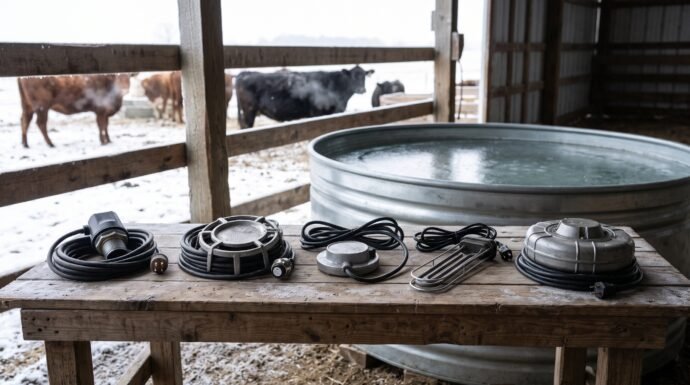
Compare 5 best water trough heater for livestock. Keeping livestock water accessible during freezing weather is essential for a dependable winter watering routine. The best water trough heater for livestock depends on your tank’s capacity, the severity of your winters, the type of container you use, and the electrical setup available at your watering station.
This comparison covers five options: a submersible stock tank heater, two Farm Innovators de-icers, a bucket heater, and a 1,500-watt floating tank de-icer. The goal is to help you match the heating method and capacity to your needs rather than assume one model is best for every farm.
Table of Contents
At a Glance
| Product | Key features | Ideal use case |
|---|---|---|
| Submersible Stock Tank Heater | Drain-plug installation; advertised thermostat; designed for compatible Rubbermaid tanks | Owners of compatible stock tanks |
| Farm Innovators H-418C Floating | 1,250 watts; convertible floating/submersible design; thermostat; cast aluminum | Larger metal or plastic stock tanks |
| Farm Innovators C-500 Submergible | 500 watts; cast aluminum; thermostat; safe for plastic containers | Smaller tanks and containers |
| Farm Innovators W-409 Bucket Heater | 1,000 watts; thermostatic control; designed for five gallons of water | Buckets and small batches of water |
| API Floating Tank De-Icer, 1,500 Watt | 1,500 watts; floating housing; thermostat; safety shut-off | Larger stock tanks requiring floating freeze protection |
Top 5 Best Water Trough Heater for Livestock
1. Submersible Stock Tank Heater
Overview
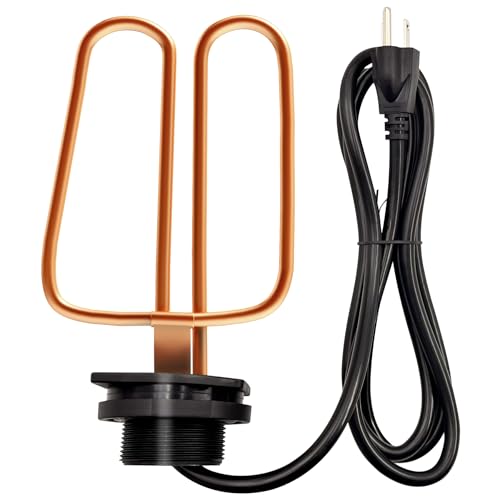
This drain-plug-style stock tank heater is advertised for compatible Rubbermaid stock tanks and is intended to provide freeze protection without taking up the same space as a conventional floating heater. Its advertised thermostat is intended to control heating automatically. Because the available product information comes from a third-party listing rather than a verified manufacturer specification sheet, check the exact installation requirements, tank compatibility, electrical protection, and warranty before buying.
Key features
- Drain-plug installation: Intended to fit a compatible tank drain opening, keeping the heating unit away from the main drinking area.
- Thermostatic operation: The listing advertises automatic temperature control to reduce unnecessary heating.
- Tank-specific design: Advertised for compatible Rubbermaid stock tanks, making exact drain-hole compatibility important.
- Sealed construction: The seller describes a sealed design intended to protect internal electrical components.
- Livestock watering application: Designed for stock tanks used to supply water to farm animals.
Pros
- Drain-plug format can leave more room inside the tank.
- Advertised automatic temperature control.
- Intended for a specific stock-tank installation rather than a loose floating setup.
- May suit owners who want to avoid placing a conventional heater inside the trough.
Cons
- Compatibility depends on the tank’s drain opening and design.
- Manufacturer-backed safety and warranty details should be confirmed before purchase.
2. Farm Innovators H-418C Floating Convertible Stock Tank De-Icer
No products found.
Overview
The Farm Innovators H-418C stands out for its convertible design: it can operate as either a floating or submersible de-icer. The manufacturer’s current product page specifies 1,250 watts, cast-aluminum construction, thermostatic control, an anti-chew cord protector, and suitability for plastic tanks. Farm Innovators lists a three-year guarantee. This combination makes it a versatile option for owners who want flexibility in how they position a stock tank heater.
Key features
- 1,250-watt heating capacity: Provides a higher rated output than the C-500, which may be useful when selecting a de-icer for a larger tank.
- Convertible installation: Can be configured for floating or submersible operation.
- Cast-aluminum construction: Provides the heater’s main structural and heat-transfer material.
- Thermostatic control: Activates heating as needed rather than relying on continuous manual switching.
- Anti-chew cord protector: Adds a physical barrier around part of the electrical cord to help resist animal chewing.
Pros
- Offers two installation configurations.
- Higher wattage than the C-500.
- Manufacturer states it is safe for plastic tanks.
- Includes an advertised three-year guarantee.
Cons
- Requires more careful placement and cord management than a drain-plug design.
- Its 1,250-watt rating means the electrical circuit must be suitable for its load.
3. Farm Innovators C-500 Submergible Utility De-Icer

Overview
The Farm Innovators C-500 is a 500-watt submersible utility de-icer made from cast aluminum. It has thermostatic control and is described by the manufacturer as safe for plastic containers. The current manufacturer product page recommends this model for containers up to 25 gallons, so it is best considered for smaller water supplies rather than assuming it can handle any tank up to 50 gallons.
Key features
- 500-watt output: A lower-power option than the H-418C or API 1,500-watt model.
- Submersible design: Sits inside the container rather than floating on the water surface.
- Cast-aluminum body: Provides a durable housing for farm utility use.
- Thermostatic control: Switches heating according to the unit’s temperature-control design.
- Plastic-container compatibility: The manufacturer identifies the model as safe for plastic when used according to its instructions.
Pros
- Lower wattage than the larger stock tank de-icers in this comparison.
- Compact submersible format.
- Cast-aluminum construction.
- Manufacturer guidance supports use in smaller containers.
Cons
- Its lower output may be unsuitable for larger troughs or severe freezing conditions.
- The current manufacturer recommendation is for containers up to 25 gallons.
4. Farm Innovators W-409 Submergible Bucket Heater


Overview
The Farm Innovators W-409 is designed primarily to heat small quantities of water rather than maintain an entire large livestock trough above freezing. It uses a 1,000-watt cast-aluminum heating element and thermostatic control, with the manufacturer’s product information describing its intended use as heating five gallons of water to approximately 100–110°F. That makes it more suitable for bucket-sized tasks and preparing warm water than for general-purpose trough de-icing.
Key features
- 1,000-watt heating element: Intended to heat a small volume of water relatively quickly.
- Five-gallon application: Designed around bucket-sized quantities rather than large stock tanks.
- Thermostatic temperature control: Maintains water at approximately 100–110°F according to the product specifications.
- Cast-aluminum construction: Built for repeated use in farm and job-site settings.
- Low-profile design: Rests at the bottom of a suitable bucket or container.
Pros
- Purpose-built for small-volume water heating.
- Useful for preparing warm water and mixing livestock milk replacers.
- Thermostatic temperature regulation.
- Designed for compatible plastic, rubber, and metal buckets.
Cons
- Not the right choice for maintaining a large livestock trough ice-free.
- The warm-water temperature range is different from a typical freeze-prevention application.
5. API Floating Tank De-Icer, 1,500 Watt

Overview
The API floating tank de-icer, model 7521, is a 1,500-watt unit designed to help keep stock tank water ice-free. Its floating housing contains a float that keeps the unit at the water’s surface, while a built-in thermostat controls operation near freezing. The product information also lists a safety shut-off system and a steel-coil cord protector. This is the most powerful heater in the comparison by rated wattage, but the right choice still depends on tank size, weather, and the available electrical circuit.
Key features
- 1,500-watt output: Provides a higher rated heating output than the Farm Innovators C-500 and H-418C.
- Floating design: Keeps the heater at the water’s surface instead of resting on the tank bottom.
- Built-in thermostat: Turns the heater on as the water approaches freezing.
- Safety shut-off: Product information describes a shut-off feature as part of the unit’s safety system.
- Steel-coil cord protection: Helps shield the electrical cord from physical wear near the heater.
Pros
- Highest rated wattage among the five options compared.
- Floating design is convenient for suitable stock tanks.
- Automatic thermostat operation.
- Includes described safety and cord-protection features.
Cons
- Higher wattage requires more electrical capacity than a lower-powered model.
- The floating design may not be suitable for every tank configuration or livestock setup.
Final Verdict
There is no single best water trough heater for every livestock operation. The right choice depends on whether you need to prevent surface ice in a stock tank, fit a heater into a drain opening, or warm a small amount of water.
- Best for flexible installation: Farm Innovators H-418C. Its floating or submersible configuration makes it a practical choice when you want more than one positioning option.
- Best for smaller containers: Farm Innovators C-500. Its 500-watt output and manufacturer guidance for containers up to 25 gallons suit smaller watering setups.
- Best for bucket-sized water heating: Farm Innovators W-409. Choose it for preparing warm water in small quantities, not as your primary large-trough de-icer.
- Best for higher rated heating output: API 1,500-watt floating de-icer. Consider it for a compatible stock tank when a higher-output floating unit is appropriate.
- Best for a drain-plug installation: Submersible Stock Tank Heater. It may suit a compatible tank, but verify the seller’s claims, fit, safety documentation, and warranty before relying on it through winter.
Before buying, check the tank manufacturer’s guidance, the heater’s approved tank capacity and material compatibility, and the instructions for grounding and ground-fault circuit-interrupter (GFCI) protection. Keep cords and connections protected from animals, water, and damage. Never operate a submersible heater outside the conditions specified by its manufacturer.
Best For Table
| Buyer scenario | Recommended product | Why |
|---|---|---|
| Want floating or submerged installation | Farm Innovators H-418C | Convertible design |
| Have a smaller water container | Farm Innovators C-500 | 500-watt output; manufacturer recommends containers up to 25 gallons |
| Need to warm water in a bucket | Farm Innovators W-409 | Designed for five-gallon applications |
| Need a higher-output floating de-icer | API 1,500-watt model | Highest rated wattage in this comparison |
| Prefer a drain-plug-style installation | Submersible Stock Tank Heater | Intended for compatible stock tanks with suitable drain openings |
FAQs
1. What type of heater is best for livestock water troughs?
A stock-tank de-icer is generally the more appropriate category for keeping a livestock trough from freezing. Choose between floating, submersible, and drain-plug designs based on the tank material, approved capacity, and installation requirements.
2. Is a 500-watt heater enough for a stock tank?
It depends on the water volume, air temperature, wind exposure, and tank insulation. Farm Innovators currently recommends the C-500 for containers up to 25 gallons. Do not assume it will keep a larger tank ice-free during severe cold.
3. Can I use a bucket heater in a livestock trough?
Not unless the manufacturer specifically approves that application. The W-409 is designed for heating approximately five gallons of water, so a stock-tank de-icer is generally the more suitable option for a large trough.
4. Are floating heaters safe for plastic water tanks?
Some are specifically designed for plastic tanks, but this cannot be assumed for every model. The H-418C is identified by its manufacturer as safe for plastic. Always follow the exact model’s instructions, including placement and water-level requirements.
5. How much electricity does a trough heater use?
A heater’s wattage indicates its rated power while operating. For example, a 1,500-watt unit running continuously for one hour would consume 1.5 kWh. Thermostatic cycling can reduce actual consumption, but the amount depends on weather and operating conditions.
6. What safety precautions should I follow?
Use the heater only in approved containers and operating conditions. Follow the manufacturer’s requirements for grounding, GFCI protection, water level, cord routing, and electrical connections. Inspect the cord and housing regularly, and keep livestock from chewing or damaging electrical components.
Last update on 2026-10-27/Affiliate links / Images from Amazon Product Advertising API