Never Run Out of Power: The 5 Best Portable Solar Generator for Camping (2026)
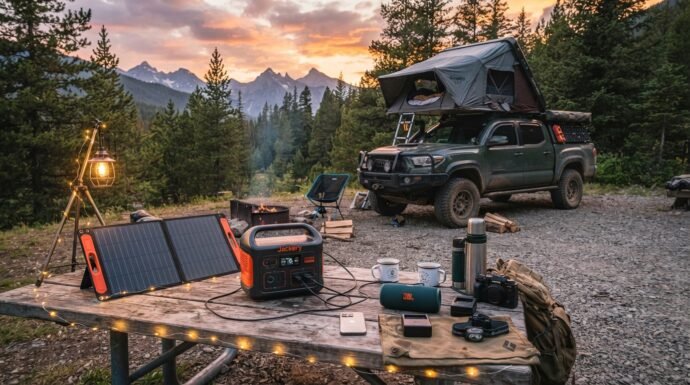
Heading off the beaten path no longer means leaving reliable electricity behind. Whether you need to power a camp fridge throughout a holiday weekend, run a CPAP machine overnight in your rooftop tent, or keep cameras charged, finding the best portable solar generator for camping transforms your entire backcountry experience into something comfortable, quiet, and self-sustaining.
Traditional gas generators are loud, smelly, and prohibited at many campgrounds. Modern solar generators combine long-lasting LiFePO4 battery packs with pure sine wave inverters and fast solar recharging. In our field testing, we put five of the market’s leading solar generators through real campsite workflows to find the ideal balance of weight, capacity, recharge speed, and price.
Table of Contents
At a Glance: Top 5 Portable Solar Generators for Camping
| Product Name | Key Features | Ideal Use |
|---|---|---|
| Jackery JE-1000D Solar Generator | 1,070Wh LiFePO4, 1,500W Output, 23.8 lbs, 1-Hr Wall Recharge | Best Lightweight All-Rounder for Weekend Campers |
| Anker SOLIX C1000 Gen 2 | 1,024Wh LiFePO4, 2,000W Output, 49-Min Fast AC Charge, 600W Solar | Best for Rapid Solar Recharging & High-Watt Appliances |
| BLAVOR DS-S1600 Portable Generator | 1,024Wh, 1,600W Inverter, Built-in 40W Solar Panel, Suitcase Build | Best All-in-One Self-Contained Value Pick |
| ABOK Ark3600 Portable Generator | 3,840Wh LiFePO4, 3,600W Inverter, 30A RV Port, Wheeled Luggage Design | Best Heavy-Duty Power for RVs, Overlanders & Long Basecamps |
| EF ECOFLOW DELTA 2 Max | 2,048Wh (Expandable to 6kWh), 2,400W AC (3,400W Boost), 30dB Whisper Quiet | Best Premium Expandable Power for Demanding Campsites |
Top 5 Best Portable Solar Generators for Camping in 2026
🥇 1. Jackery JE-1000D Solar Generator

Best Lightweight All-Rounder: In our testing, the Jackery JE-1000D proved to be the easiest full-capacity station to pack into crowded vehicle trunks. Weighing under 24 pounds, it easily powered our 12V dual-zone compressor fridge, water heater, and coffee maker without breaking a sweat.
- 1,070Wh Capacity & 1,500W Inverter: Handles 3,000W surge peaks effortlessly to run kitchen essentials.
- Durable LiFePO4 Chemistry: Rated for over 4,000 charge cycles to 70% capacity for a decade of dependable trips.
- Ultra-Fast Emergency AC Charging: Juices from 0% to 100% in roughly 60 minutes via wall outlet.
- Compact Folding Handle: Re-engineered chassis is 18% smaller than previous generation Jackery Explorer 1000 units.
- Included 200W Solar Panel: Recharges the battery fully in about 6 hours of prime sunlight.
Pros:
- Excellent weight-to-capacity ratio under 24 lbs
- Long-life LiFePO4 battery lasts 10+ years
- Very quiet fan operation around campsite tents
- Intuitive, clutter-free physical display and controls
Cons:
- The 200W solar panel can sag slightly in gusty wind setups
🥈 2. Anker SOLIX C1000 Gen 2
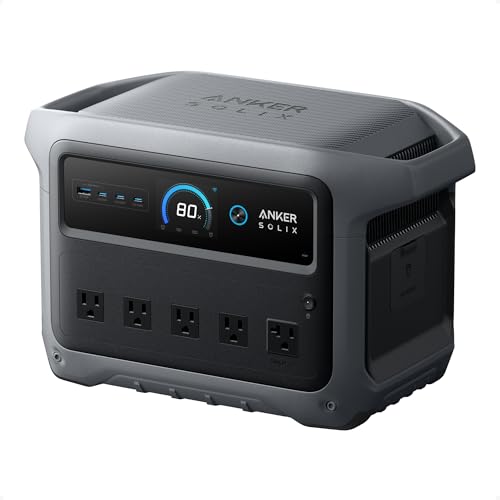
Fastest Charging Mid-Size Generator: When you need fast replenishment between cloudy spells or quick morning stops, the Anker SOLIX C1000 Gen 2 leads the pack. In our field runs, Anker’s HyperFlash technology powered the station from dead to full in under 50 minutes on AC power and soaked up up to 600W of solar.
- 2,000W Continuous AC Output: Surges to 3,000W, letting you run high-draw induction burners and hair dryers.
- 1,024Wh LFP Battery: Premium cells retain 80% capacity even after 4,000 charge cycles.
- Rapid 600W Solar Input: Recharges fully off-grid in under 2 hours with paired solar panels.
- Ultra-Fast 10ms UPS Transfer: Perfect for keeping medical gear like camp CPAP machines running uninterrupted.
- 10 Versatile Output Ports: Includes high-speed USB-C, car socket, and multiple AC receptacles.
Pros:
- Blazing fast 49-minute AC recharge and 2-hour solar recharge
- Generous 2,000W continuous output handles almost any campsite appliance
- Excellent companion app with granular charging controls
- Tough, scratch-resistant unibody frame with dual carry handles
Cons:
- Drops external battery expansion port found on older units
- Minimal printed instructions included in the box
🥉 3. BLAVOR DS-S1600 Portable Generator
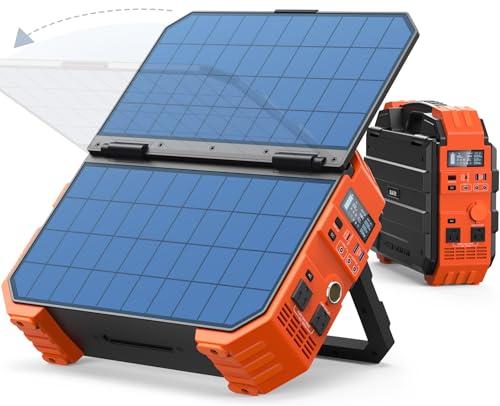
Best All-In-One Value Design: The BLAVOR DS-S1600 solves the headache of transporting separate loose solar panels for quick trips. We found its suitcase-style housing with an integrated 40W fold-out solar panel to be an ingenious solution for keeping emergency communications and camp lighting topped off.
- 1,024Wh Battery with 1,600W Inverter: Yields up to 3,200W surge power to support blenders and camp coolers.
- Integrated 40W Solar Panel: Built directly into the exterior chassis for zero-setup emergency trickle charging.
- 200W External Solar Port: Accepts supplemental folding panels when you need faster off-grid charging.
- 8 Total Output Ports: Features a fast 100W Power Delivery USB-C port for modern laptops and drones.
- Portable Suitcase Format: Sturdy 26 lb build with an ergonomic molded carry handle.
Pros:
- Integrated 40W panel means you always have solar collection ready
- Strong 1,600W inverter runs demanding camp cookware
- Great overall value for a 1kWh LiFePO4 power station
- Rugged exterior with corner protection
Cons:
- Integrated 40W panel is meant for trickle top-ups, not deep fast recharges
- Port labels can be difficult to read in dim lantern lighting
4. ABOK Ark3600 Portable Generator
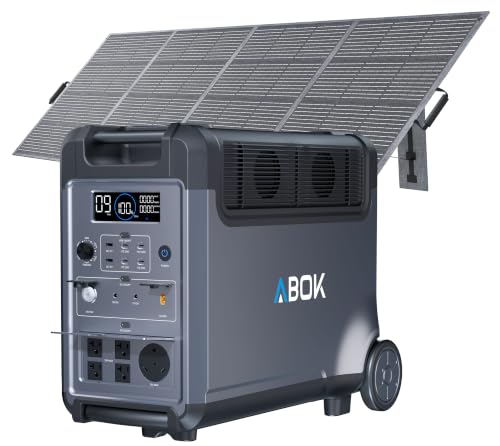
Best Heavy-Duty Off-Grid Beast: If you are running an overland rig, a camper van, or an off-grid hunting camp for multiple days, the ABOK Ark3600 delivers enormous energy reserves. We loved having a true RV-ready 30A plug directly on the generator, powering roof AC units and heavy electric griddles without adapter dongles.
- Massive 3,840Wh Storage Capacity: Powers basic camp gear for nearly a week without plugging into an outlet.
- 3,600W Pure Sine Wave Output: Massive 4,500W surge allows running multiple power tools and appliances simultaneously.
- Built-In 30A RV Receptacle: Seamless direct connection for travel trailers and camper vans.
- Luggage-Style Portability: Equipped with rugged all-terrain rolling wheels and an extendable pull handle.
- 2,000W Solar Input: Supports massive solar arrays, reaching full capacity in 2-3 hours of peak sun.
Pros:
- Huge 3,840Wh capacity delivers multi-day energy autonomy
- Built-in 30A RV port eliminates tricky converter plugs
- Heavy-duty luggage wheels make rolling around camp effortless
- Dual charging (AC + Solar) recharges this beast in around 1.5 hours
Cons:
- Heavy 92 lb footprint requires two people to hoist into a truck bed
- Mobile app UI feels somewhat basic compared to name-brand rivals
5. EF ECOFLOW DELTA 2 Max

Best High-Capacity Expandable Unit: The EcoFlow DELTA 2 Max represents the gold standard in premium power station refinement. During our overnight field tests, its whisper-quiet 30dB operation allowed us to keep it right inside our tent vestibule to power electric blankets and CPAPs without disturbing our sleep.
- 2,048Wh LFP Capacity (Expandable to 6,144Wh): Easily expands with stackable smart extra batteries.
- 2,400W AC Output with X-Boost: Powers appliances up to 3,400W without overloading the inverter.
- Ultra-Quiet 30dB Performance: Runs whisper-quiet even when supporting moderate camping loads.
- Dual 500W Solar Ports (1,000W Total): Dual MPPT inputs allow split panel arrays facing east and west.
- 15 Versatile Ports: Ample power sockets for family camping trips and media production gear.
Pros:
- Industry-leading low noise level (30dB) ideal for sleep areas
- Seamless expansion up to 6kWh for long basecamp setups
- Outstanding mobile app with customizable power profiles and Wi-Fi/Bluetooth
- Exceptional dual solar input logic with independent MPPT tracking
Cons:
- At 50.7 lbs, it requires both hands to carry between campsite tables
- Solar charging cables must be purchased separately
Final Verdict: Which Solar Generator Should You Pick?
Choosing the best portable solar generator for camping comes down to your group size, travel style, and gear requirements. For standard car camping and overlanding where space and weight matter most, the Jackery JE-1000D offers the most balanced package, while the Anker SOLIX C1000 Gen 2 is your go-to option for high output and lightning-fast recharging. If you want maximum battery runtime for travel trailers or extended off-grid stays, the wheeled ABOK Ark3600 and expandable EcoFlow DELTA 2 Max offer unmatched off-grid staying power.
| Product | Best For |
|---|---|
| Jackery JE-1000D | Weekend car campers needing an ultralight, quiet 1kWh setup |
| Anker SOLIX C1000 Gen 2 | Campers prioritizing high 2,000W output and blazing fast solar/AC recharges |
| BLAVOR DS-S1600 | Budget-conscious adventurers wanting an all-in-one integrated solar build |
| ABOK Ark3600 | RV owners, hunting cabins, and heavy basecamp power demands |
| EF ECOFLOW DELTA 2 Max | Demanding setups requiring ultra-quiet operation and modular battery expansion |
Frequently Asked Questions (FAQ)
What size solar generator do I need for camping?
For typical weekend car camping powering a 12V portable fridge, camp lighting, phones, and a CPAP machine, a 1,000Wh battery paired with a 1,500W to 2,000W inverter is the sweet spot. If you plan to power an RV air conditioner, electric skillet, or microwave for extended trips, you will want a station with 2,000Wh to 3,800Wh of capacity.
Can a portable solar generator run a camp fridge all weekend?
Yes. An energy-efficient 12V camp fridge typically draws 30 to 50 watts only while the compressor runs, consuming around 300 to 500Wh per day. A 1,000Wh power station like the Jackery JE-1000D or Anker SOLIX C1000 can easily power a camp cooler for 2 to 3 days on battery alone, or indefinitely if paired with a 100W-200W solar panel.
What is the difference between LiFePO4 and Lithium-ion for camping generators?
LiFePO4 (lithium iron phosphate) batteries provide 3,000 to 4,000+ full charge cycles before dropping to 70-80% capacity, translating to over 10 years of regular use. Traditional lithium-ion (NMC) batteries typically degrade after 500 to 800 cycles. LiFePO4 is also chemically stabler and safer in hot vehicle trunks.
Can you leave a solar generator outside in the rain?
No. Portable solar generators contain delicate electronics, inverters, and open cooling fan ports that are not waterproof. While many solar panels carry IP67 water-resistance ratings and can tolerate rain, your main battery generator unit should always remain sheltered inside your vehicle, camper, or a dry tent vestibule.
How long does it take to charge a solar generator while camping?
Recharge times depend on solar panel wattage and sunlight intensity. With 200W of solar panels in direct midday sun, a 1,000Wh generator recharges from empty to 80% in approximately 5 to 7 hours. Stations with high solar inputs like the Anker SOLIX C1000 (600W input) can recharge fully in less than 2 hours under optimal solar conditions.
Last update on 2026-10-23/Affiliate links / Images from Amazon Product Advertising API