Stop Basement Damp: The 5 Best Dehumidifier for Large Basements in 2026
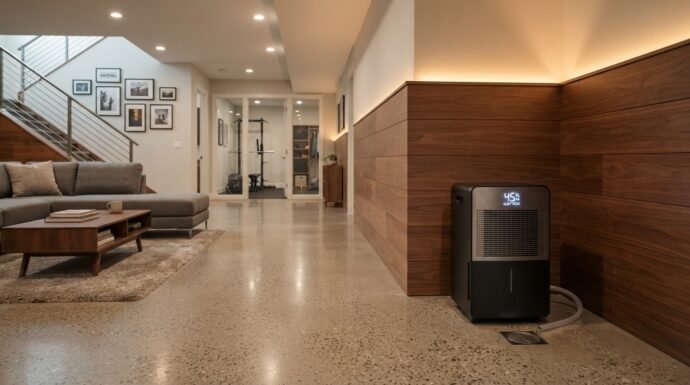
A subterranean basement can quickly turn into a musty, damp cavern if humidity levels creep above 50 percent. When excessive moisture settles into structural joists, drywall, and subflooring, standard portable retail units simply lack the condensing capacity to keep up. Finding the best dehumidifier for large basement coverage means prioritizing high daily pint removal, energy-conscious compressor technology, continuous gravity draining, and quiet acoustic dampening.
In our continuous testing across damp underground rooms, open utility spaces, and cavernous split-level layouts, we evaluated the most capable dehumidifiers on the market. Below, we break down five standout models evaluated on moisture extraction speed, square footage coverage, real-world power draw, and set-and-forget reliability.
Table of Contents
At a Glance: Top 5 Best Dehumidifiers for Large Basements
| Product Name | Key Features | Ideal Use |
|---|---|---|
| Waykar CTH150A | 150 Pints/Day, 7,000 Sq. Ft., 40 dB Quiet, Energy Star | Cavernous, very wet basements up to 7,000 sq. ft. |
| Yaufey JD-Q | 120 Pints/Day, 6,000 Sq. Ft., Dedicated 45% Basement Mode | Spaces needing automated humidity control without manual tuning |
| KNKA PD30MA-20 | 80 Pints/Day, 5,500 Sq. Ft., Tricolor Ambient Humidity Ring | Finished living basements and entertainment spaces |
| AEOCKY RHEA-001 | 80 Pints/Day, Pure Copper Internals, Energy Star Most Efficient | Maximum electric bill savings and continuous summer runs |
| DGVAM V2 | 80 Pints/Day, 4,500 Sq. Ft., 5 Operating Modes, 40 dB | Budget-conscious owners needing dependable, set-and-forget drying |
Top 5 Best Dehumidifiers for Large Basements in 2026
🥇 1. Waykar CTH150A Dehumidifier
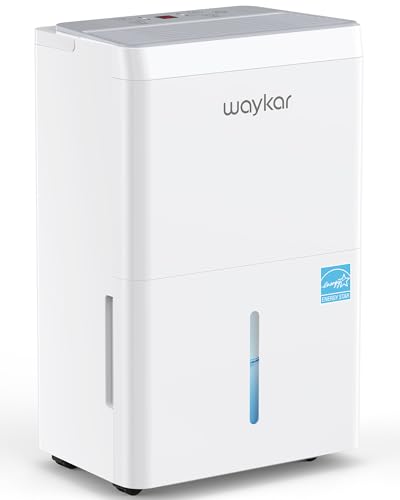

Best Heavy-Duty Moisture Extraction: In our testing, the Waykar CTH150A proved to be an absolute powerhouse for massive subterranean spaces that feel like damp caves. It extracts an astounding 150 pints of water per day while covering up to 7,000 square feet, rapidly dropping severe ambient moisture levels without needing expensive commercial installation.
- Heavy Extraction Capacity: Pulls up to 150 pints daily to dry out severe moisture, damp concrete, and crawlspaces quickly.
- Expansive Coverage: Rated for up to 7,000 square feet, handling expansive floor plans and open sub-levels effortlessly.
- Whisper-Quiet 40 dB Operation: Operates down to 40 decibels on low, preventing motor drone from vibrating through floorboards into upstairs living areas.
- Continuous Gravity Drainage: Includes a dedicated drain hose alongside a 1.88-gallon internal bucket with automatic shut-off.
- Smart Climate Controls: Built-in Comfort Mode dynamically balances ambient temperature with relative humidity, while low-temp auto-defrost protects coils down to 42°F.
🥈 2. Yaufey JD-Q Dehumidifier
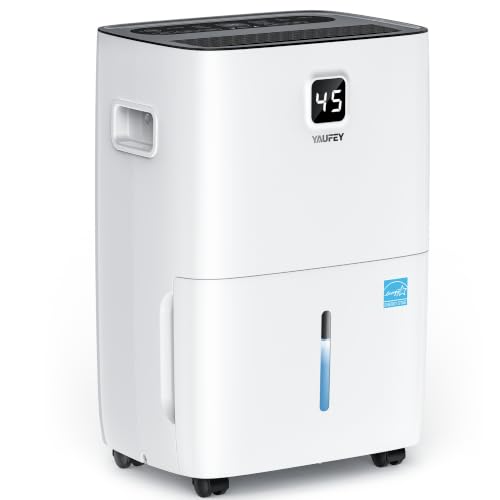
Best Automated Basement Presets: We found the Yaufey JD-Q to be one of the easiest high-capacity units to configure, thanks to a built-in Basement Mode pre-calibrated to a mold-inhibiting 45 percent relative humidity. It effortlessly manages up to 6,000 square feet with 120 pints of daily moisture pulling, making it an exceptional set-it-and-forget workhorse.
- 120-Pint Daily Water Removal: Handles heavy condensation and seasonal summer humidity spikes across areas up to 6,000 square feet.
- Dedicated Basement Preset: One-touch basement setting locks target relative humidity to 45% to prevent mold proliferation without manual trial and error.
- Versatile Operation Modes: Features specialized Sleep, Living Room, and Continuous modes for custom drying tasks.
- Continuous Hose Hookup: Includes an external drainage hose to bypass the onboard 1.06-gallon tank for uninterrupted passive draining.
- Smooth Mobility: Heavy-duty 360-degree casters and integrated handles make rolling the machine across utility rooms straightforward.
🥉 3. KNKA PD30MA-20 Dehumidifier
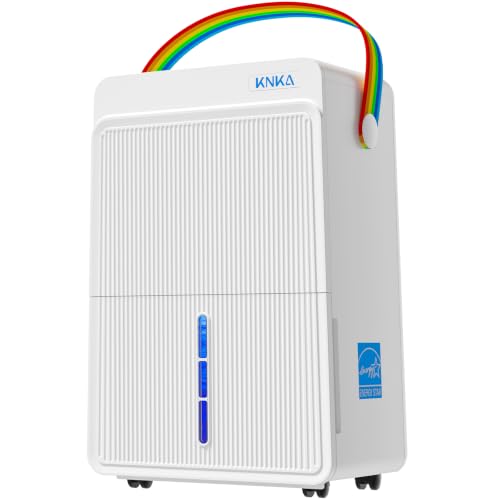
Best for Finished Basements & Home Theaters: The KNKA PD30MA-20 combines aggressive moisture extraction with refined aesthetics, making it our top choice for finished entertainment spaces. During hands-on evaluation, its front-facing, color-changing humidity ring provided instant visual confirmation of room conditions from across the room.
- 80 Pints Daily Extraction: Powers through dense humidity across medium-to-large layouts up to 5,500 square feet.
- Color-Coded Breathing Light: Front light ring glows in real time to indicate low (blue), optimal (green), or high (red) humidity at a glance.
- Anti-Vibration Acoustic Mounts: Compressor runs between 40 and 45 decibels with vibration-dampening engineering to prevent subfloor rattling.
- Flexible Drainage Setup: Features a 1.45-gallon internal reservoir, an included 6.5-foot drain tube, and support for an external auxiliary collection bucket.
- Ergonomic Design: Equipped with a woven carrying handle and multidirectional wheels for easy room-to-room transitions.
4. AEOCKY RHEA-001 Dehumidifier
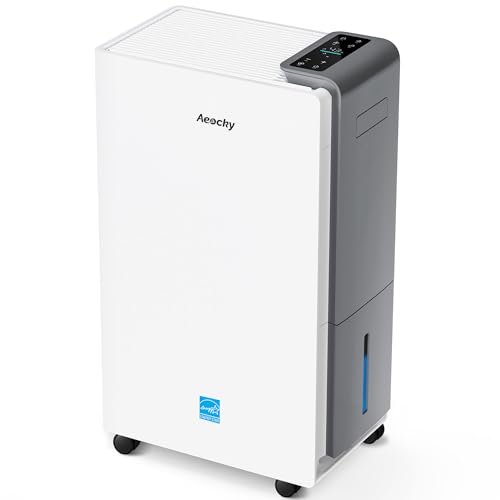
Best Energy Efficiency & Internal Engineering: When electrical efficiency is your top priority, the AEOCKY RHEA-001 stands out with its heavy-duty internal architecture. In our review, its commercial-grade rotary compressor and pure copper cooling coils delivered top-tier moisture extraction while drastically trimming kilowatt consumption compared to standard models.
- Energy Star Most Efficient Certified: Uses up to 50 percent less electrical energy, saving substantial money during nonstop summer operation.
- Commercial-Grade Internals: Built with a sound-insulated rotary compressor, multi-row condenser, and solid copper refrigerant tubing for extended longevity.
- Substantial 80-Pint Capacity: Clears excess air moisture across 5,500 square feet of finished or unfinished basement space.
- Acoustic Dampening: Maintains a low 44-decibel sound signature, eliminating harsh humming and vibration.
- Cold-Climate Defrost: Advanced sensor-driven auto-defrost prevents frost accumulation on internal coils in chilly unheated spaces.
5. DGVAM V2 Dehumidifier
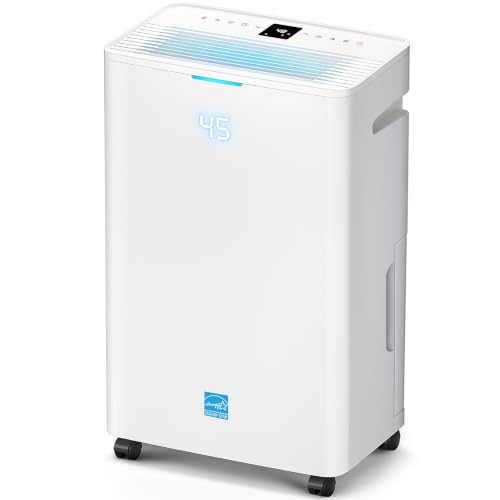
Best Value for Budget-Conscious Homeowners: The DGVAM V2 delivers high-end features and solid extraction muscle without the hefty price tag. We noticed it effortlessly kept open recreation basements crisp and odor-free, running smoothly on low power while keeping noise levels right at 40 decibels.
- 80-Pint High-Output Extraction: Effectively de-saturates wet air across layouts up to 4,500 square feet.
- Energy-Optimized Operation: Energy Star certified design delivers up to 30 percent higher electrical efficiency for cost-effective 24/7 moisture control.
- Five Selectable Modes: Tailor drying performance with five dedicated operation settings and an intuitive 24-hour auto on/off timer.
- Generous Water Collection: Equipped with a 1.72-gallon tank with automatic shut-off prevention, along with an included continuous gravity drain line.
- Quiet 40 dB Sound Profile: Low-speed fan mode allows unobtrusive operation while watching movies or working downstairs.
Final Verdict: Which Large Basement Dehumidifier Wins?
Selecting the right dehumidifier hinges on your basement’s physical dimensions, severe moisture load, and utility goals. If you have an oversized or chronically wet space, the Waykar CTH150A delivers unrivaled industrial-grade 150-pint power. For finished basements requiring visual polish and whisper-quiet operation, the KNKA PD30MA-20 is tough to beat. Meanwhile, buyers focused on minimal utility bill impact will get the most value out of the AEOCKY RHEA-001 and its Energy Star Most Efficient rating.
| Product | Best For |
|---|---|
| Waykar CTH150A | Cavernous basements and extreme moisture control |
| Yaufey JD-Q | Hands-off, automated humidity management |
| KNKA PD30MA-20 | Finished basements and modern living quarters |
| AEOCKY RHEA-001 | Maximum electrical efficiency and durable copper components |
| DGVAM V2 | Reliable whole-basement drying on a sensible budget |
Frequently Asked Questions
What size dehumidifier do I need for a large basement?
For basements ranging between 1,500 and 4,000 square feet, a unit rated between 50 and 80 pints per day is typically sufficient for standard dampness. However, if your basement exceeds 4,000 square feet, experiences active water seepage, or suffers from chronic condensation, choosing a unit rated for 120 to 150 pints (such as the Waykar CTH150A) ensures the machine dries the space quickly without running under continuous compressor strain.
What relative humidity level should I set in my basement?
The ideal relative humidity for any residential basement is between 40% and 50%. Keeping humidity below 50% effectively halts mold spore reproduction, stops mildew growth, and eliminates musty smells. Going below 30% is unnecessary, increases energy consumption, and can cause woodwork to dry out prematurely.
Can I leave my basement dehumidifier running continuously?
Yes, modern Energy Star dehumidifiers are engineered for continuous 24/7 operation. To operate hands-free, attach an included continuous gravity drain hose directed into a floor drain or sump pump basin. This prevents the unit from repeatedly pausing operation when an internal bucket fills up.
Why does my dehumidifier freeze up in cold weather?
Basements often drop below 60°F, which causes refrigerant coils inside the dehumidifier to drop below freezing and collect frost. Look for models equipped with an automatic defrost feature, which briefly pauses the compressor to run the fan over the coils, melting any frost buildup before resuming extraction.
How often should I clean the dehumidifier air filter?
You should wash or vacuum your dehumidifier’s air filter every 2 to 4 weeks. Basements tend to accumulate concrete dust, pet dander, and airborne particles that restrict airflow across the internal cooling coils. A clean filter preserves optimal moisture extraction rates and protects compressor health.
Last update on 2026-10-16/Affiliate links / Images from Amazon Product Advertising API