The Data Nerd’s Guide to the Best Digital Weather Stations
Tired of your smartphone weather app telling you it’s sunny while you’re staring at a downpour in your own backyard? In 2026, the demand for hyper-local environmental data has never been higher, and a professional-grade digital weather station is the only way to get real-time accuracy for your exact microclimate.
We’ve spent weeks testing the latest sensors, displays, and smart home integrations to find the most reliable units on the market. Whether you need a simple nightstand display or a solar-powered array that beams data to the cloud, these top picks offer the best balance of precision and ease of use for modern homeowners.
Table of Contents
At a Glance: Top 5 Best Digital Weather Stations
| Product Name | Key Features | Ideal Use |
|---|---|---|
| Newentor Q3-BLACK | 7.5″ LCD, 3-Channel Support | Budget-Friendly / Basic Home Use |
| La Crosse C85845-INT | High Contrast, Atomic Clock | Bedroom / Nightstand Use |
| Ambient Weather WS-2902 | 7-in-1 Array, WiFi, Alexa | Smart Home Enthusiasts |
| AcuRite Iris 01544 | 5-in-1 Sensor, Remote App | Remote Property Monitoring |
| Ambient Weather WS-2000 | HD TFT Display, Expandable | Professional / Data Geeks |
Top 5 Best Digital Weather Stations 2026
🥇 1. Newentor Q3-BLACK Weather Station

The ultimate choice for homeowners seeking a large, readable display without breaking the bank. We found the 7.5-inch LCD screen exceptionally clear from across the room, making it perfect for a kitchen counter or living room hub. It tracks all the essentials like temperature, humidity, and barometric pressure while maintaining a sleek, minimalist aesthetic.
- 7.5-inch Color LCD with adjustable backlight brightness levels.
- 3-Channel Support allows you to monitor three separate sensor locations simultaneously.
- Atomic Clock Integration ensures your time and date are always perfectly synced via radio signals.
- Integrated Moon Phase icons and a 12-to-24-hour localized forecast display.
🥈 2. La Crosse C85845-INT Station

A dependable mid-range station designed for those who prioritize high-contrast visibility and essential alerts. In our testing, the adjustable brightness stood out, allowing the station to double as a non-intrusive nightstand clock. It focuses on the most critical data points, presenting them in an uncluttered, color-coded format that is easy to digest at a glance.
- High-Contrast Background makes icons and text pop even in low-light environments.
- Heat Index and Dew Point calculations provide a more accurate “feel-like” temperature assessment.
- Daily High/Low Records automatically reset each day to keep your data current.
- Self-Setting Atomic Time with automatic updates for Daylight Savings Time.
🥉 3. Ambient Weather WS-2902 Station

The gold standard for smart home integration and comprehensive outdoor environmental tracking. This solar-powered 7-in-1 array measures everything from wind speed to UV intensity, making it a favorite for weather hobbyists. We particularly enjoyed the ability to ask Alexa for the backyard temperature while cooking, thanks to its robust WiFi connectivity.
- 7-in-1 Sensor Array tracks wind, rain, UV, solar radiation, temperature, and humidity.
- WiFi Enabled for seamless data streaming to Ambient Weather Network and Weather Underground.
- Smart Home Compatible with full support for Amazon Alexa, Google Home, and IFTTT.
- Solar Powered outdoor sensor array with battery backup for 24/7 reliability.
🏅 4. AcuRite Iris 01544 Station
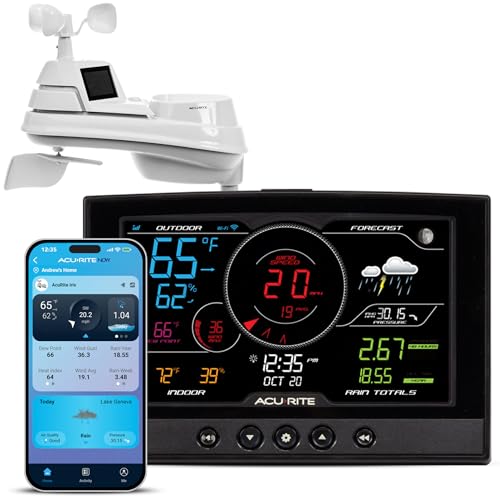
Designed for users who need to keep an eye on their property’s conditions from anywhere in the world. The standout feature is the “My AcuRite” app, which provides a professional-grade interface for remote monitoring. We noticed the wide viewing angle on the display is superior to many competitors, ensuring no data washout when viewed from the side.
- 5-in-1 Outdoor Sensor is one of the easiest to mount on standard poles or railings.
- My AcuRite Mobile App allows for real-time remote monitoring and custom weather alerts.
- Self-Calibrating Forecast uses localized pressure data to generate a 12-hour future outlook.
- Direct-to-WiFi Console beams data directly to the cloud without needing a PC bridge.
🏅 5. Ambient Weather WS-2000 Station
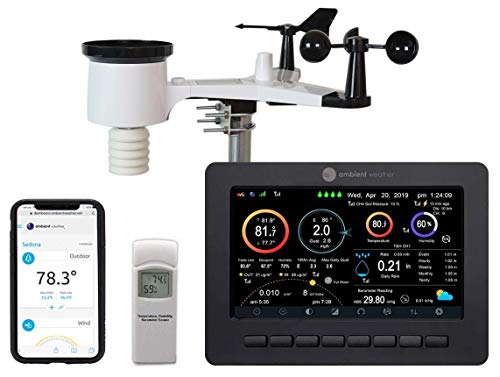
The premier choice for serious data enthusiasts who want a high-definition experience and massive expandability. This station feels like a premium tablet, featuring a high-definition TFT display that puts standard LCDs to shame. It supports an incredible range of optional sensors, allowing you to grow your weather network over time as your needs evolve.
- High-Definition TFT Display offers vibrant colors and the best viewing angles in the industry.
- SD Card Slot enables easy data logging and CSV export for analysis in Excel.
- Massive Sensor Support allows for optional lightning detectors, soil moisture probes, and more.
- Solar Powered Osprey Array provides professional-level accuracy for all outdoor variables.
Final Verdict
Choosing the right weather station comes down to how much data you crave. If you want a simple, beautiful display for the kitchen, the Newentor Q3-BLACK is a fantastic value. For the smart home power user, the Ambient Weather WS-2902 remains the most balanced choice for connectivity. However, if you are a true weather nerd who wants the best screen and the ability to track lightning or soil moisture, the Ambient Weather WS-2000 is the undisputed champion of 2026.
| Product | Best For |
|---|---|
| Newentor Q3-BLACK | Budget Accuracy |
| La Crosse C85845-INT | Bedroom/Simple Check |
| Ambient Weather WS-2902 | Smart Home Connectivity |
| AcuRite Iris 01544 | Remote Property Tracking |
| Ambient Weather WS-2000 | Professional Data & HD Display |
FAQs
Do digital weather stations require a WiFi connection to work?
Not necessarily. Many stations, like the Newentor Q3, work perfectly as standalone units using radio frequencies to communicate with the outdoor sensor. However, you will need WiFi if you want to view your data on a smartphone or upload it to networks like Weather Underground.
Where is the best place to mount an outdoor weather sensor?
The ideal location is about 5 to 6 feet above the ground in an open area, away from heat-radiating surfaces like asphalt or concrete. To get accurate wind readings, you should ideally mount the sensor 10 feet above any nearby obstructions like rooflines or trees.
How often do I need to change the batteries in the outdoor sensor?
Most modern sensors, especially solar-powered ones like the Ambient Weather series, can last 12 to 24 months on a single set of high-quality lithium batteries. We recommend using lithium batteries because they perform much better than alkaline in extreme freezing temperatures.
Can I connect my weather station to Alexa or Google Home?
Yes, but only if the station is WiFi-enabled and supports those specific smart home protocols. Models like the Ambient Weather WS-2902 and WS-2000 are designed specifically for this, allowing you to get voice-activated weather reports directly from your backyard sensors.
How accurate are home weather stations compared to the airport?
Home stations are surprisingly accurate, often within 1-2 degrees of professional equipment. The main benefit is that they reflect the microclimate of your specific yard, which can differ significantly from an airport weather station located several miles away.
What is the benefit of a 7-in-1 sensor versus a 5-in-1 sensor?
A 7-in-1 sensor typically adds measurements for UV intensity and solar radiation (light levels) on top of the standard temperature, humidity, wind speed, wind direction, and rain. This is particularly useful for gardeners or those monitoring solar panel efficiency.
Last update on 2026-09-08/Affiliate links / Images from Amazon Product Advertising API