
Dig Effortlessly : The 5 Best Post Hole Digger Gas Powered (2026)
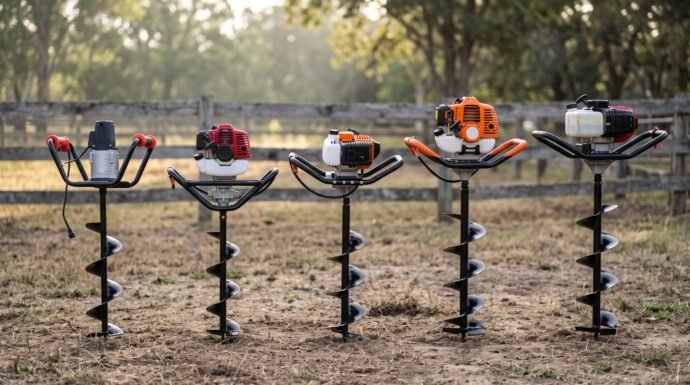
Installing fence posts, planting trees, or setting poles can require dozens of accurately sized holes. A gas-powered post hole digger can reduce manual effort, particularly when working across a large property without convenient access to electricity. So let’s compare the 5 best post hole digger gas powered.
The right choice depends on engine displacement, auger diameter, digging depth, portability, and the type of soil you need to handle. This comparison covers four gas-powered options and one electric alternative, highlighting the practical differences buyers should consider.
Table of Contents
At a Glance
| Product | Key Features | Ideal Use Case |
|---|---|---|
| XtremepowerUS 1500W Electric Post Hole Digger | 1500W electric motor; no gasoline required | Residential projects near a suitable power supply |
| PROYAMA 54cc Post Hole Digger | 54cc engine; four listed auger sizes; extension rods | Buyers who need multiple hole diameters |
| VEVOR 43cc Post Hole Digger | 43cc engine; 8-inch auger; 1.2L fuel tank | General garden and fencing work |
| Prowoo 72CC Gas Powered Post Hole Digger | 72cc engine; listed auger and extension accessories | Buyers prioritizing larger engine displacement |
| Yoputetool 52cc Gas Post Hole Digger | 52cc engine; listed auger and extension accessories | General property maintenance and planting |
The VEVOR specifications are supported by its available product manual, while the PROYAMA configuration is described in its product documentation.
Top 5 Post Hole Diggers
1. XtremepowerUS 1500W Electric Post Hole Digger
Overview
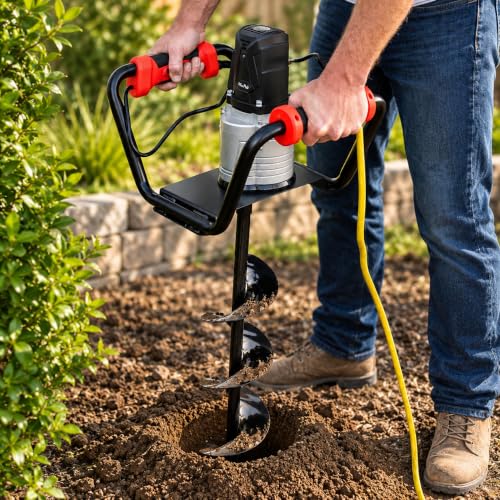
The XtremepowerUS 1500W Electric Post Hole Digger is an alternative for buyers who want powered digging without gasoline. According to the supplied product description, it features a 1500W motor and is intended for jobs such as fence installation, tree planting, and landscaping.
Its main advantage over the gas-powered models in this comparison is the electric power source. It avoids gasoline mixing and engine refueling, although buyers must account for access to an appropriate electrical supply.
5 Key Features
- 1500W electric motor: Provides powered auger operation for routine digging tasks, subject to soil conditions and the manufacturer’s operating limits.
- Listed torque of 90 ft-lb: The supplied description specifies this torque figure; confirm the rating and its measurement conditions with the manufacturer.
- Listed operating speed of 270 RPM: Gives buyers a reference for the advertised auger rotation speed.
- Manganese-steel auger: The supplied description identifies a steel auger intended for digging applications.
- Safety lock and anti-slip handles: The supplied description lists these features for activation control and grip.
Pros
- No gasoline mixing or engine refueling.
- Convenient for projects with suitable electrical access.
- Avoids routine gasoline-engine maintenance.
- Suitable for considering residential landscaping and fence-post applications.
Cons
- Requires a suitable power supply and a safe cable arrangement if corded.
- Is not a gas-powered machine, so it does not meet a strict requirement for gasoline operation.
2. PROYAMA 54cc Post Hole Digger
Overview
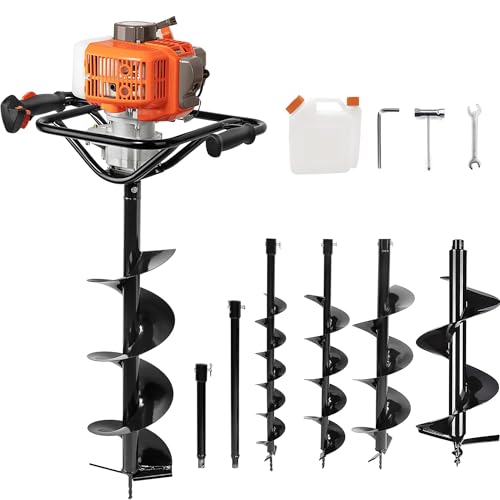
The PROYAMA 54cc Post Hole Digger is a gas-powered earth auger designed for digging holes for fencing, planting, and landscaping. Its most useful distinguishing feature is the advertised range of auger diameters, making it worth considering when one project requires smaller planting holes and another requires wider post holes.
Available product documentation describes a 54cc, two-cycle engine, four auger sizes, and two extension rods.
5 Key Features
- 54cc two-cycle engine: Supplies gasoline-powered operation without requiring a nearby electrical outlet.
- Four listed auger sizes: The documented configuration includes 4-, 6-, 8-, and 12-inch augers.
- Two extension rods: The documented package lists 12-inch and 20-inch extension rods for additional reach.
- Ergonomic handle design: The product documentation describes handles with anti-vibration grips.
- Gasoline and two-cycle oil mixture: The engine requires the specified premixed fuel. Follow the exact instructions supplied with the machine rather than assuming a mixture ratio.
Pros
- Multiple auger sizes offer flexibility for different hole diameters.
- Extension rods provide additional reach when compatible with the intended setup.
- Gas-powered operation suits sites without convenient electrical access.
- The documented accessory selection is useful for varied planting and fencing tasks.
Cons
- Requires fuel preparation and routine small-engine maintenance.
- The widest auger and extension setup may require more careful handling, especially in difficult soil.
3. VEVOR 43cc Post Hole Digger


Overview
The VEVOR 43cc Post Hole Digger is a gas-powered earth auger intended for garden, farmland, and general digging work. Its documented configuration includes an 8-inch auger, a 1.2L fuel tank, and a gearbox designed to transfer engine power to the drill.
The available manual lists a 43cc engine, 1250W power rating, 320 RPM drill speed, and a 30-inch-long auger. These specifications make it a practical candidate for buyers whose projects suit the included auger size.
5 Key Features
- 43cc gasoline engine: Provides independent operation without a mains electrical connection.
- 1250W listed power rating: Offers a stated power reference for comparing the machine with other options.
- 8-inch auger: The documented configuration includes one auger for creating holes of that nominal diameter.
- 1.2L fuel tank: Provides onboard fuel capacity for operation between refills.
- Gearbox and steel auger construction: The documentation identifies alloy gears and an alloy-steel auger.
Pros
- Includes an auger suitable for many general planting and post-hole applications.
- Does not require a mains electrical connection.
- Has a documented 1.2L fuel tank.
- Its supplied auger specification makes hole-size planning straightforward.
Cons
- The documented package centers on one 8-inch auger, limiting diameter choice unless compatible accessories are purchased separately.
- Requires correct fuel preparation, starting procedures, and engine maintenance.
4. Prowoo 72CC Gas Powered Post Hole Digger

Overview
The Prowoo 72CC Gas Powered Post Hole Digger is advertised with a 72cc engine and is the largest-displacement option in this comparison. That makes it worth investigating for buyers who prioritize engine size when evaluating powered digging equipment.
The supplied product description mentions multiple auger bits and extension rods. However, I could not independently establish the exact included sizes, rated output, machine weight, or operating performance from the available documentation. Engine displacement alone does not establish that this machine will dig faster or perform better in every soil type.
5 Key Features
- Advertised 72cc engine: The largest stated displacement among the five products.
- Gasoline-powered operation: Intended for use without a mains electrical connection.
- Advertised interchangeable augers: The supplied description indicates multiple drill-bit options; verify the exact sizes before purchase.
- Advertised extension rods: Intended to extend the machine’s reach when compatible with the auger setup.
- Recoil starting and handle controls: Listed in the supplied description; confirm the configuration in the current product listing.
Pros
- Has the largest advertised engine displacement among these five options.
- Does not depend on mains electricity during normal operation.
- The advertised accessory package may suit varied hole sizes.
- Worth comparing for projects where a larger-displacement engine is a priority.
Cons
- The exact included auger sizes and extension lengths need confirmation.
- Engine displacement alone does not prove superior torque, durability, or performance in hard soil.
5. Yoputetool 52cc Gas Post Hole Digger

Overview
The Yoputetool 52cc Gas Post Hole Digger is marketed as a gasoline-powered earth auger for planting, fencing, and general property work. Its advertised 52cc engine places it between the VEVOR 43cc and PROYAMA 54cc models in engine displacement.
The supplied description also lists auger bits, extension rods, and vibration-dampening handles. Because the exact package configuration and technical ratings could not be independently verified, buyers should check the current listing carefully before relying on those details.
5 Key Features
- Advertised 52cc engine: A midrange displacement among the gas-powered products in this comparison.
- Gasoline-powered operation: Suitable for sites where a mains electrical supply is inconvenient.
- Advertised interchangeable augers: Check the current listing for the precise diameters included.
- Advertised extension rods: Intended to provide additional digging reach when correctly fitted.
- Listed emergency shutoff and vibration-dampening handles: Confirm the exact safety and handle configuration before purchase.
Pros
- Gas-powered design allows use away from mains electricity.
- Its advertised displacement falls between the smaller VEVOR and larger PROYAMA engines.
- The listed accessory package may offer flexibility for different jobs.
- Worth considering for routine planting and property-maintenance tasks if the package suits your needs.
Cons
- The included auger diameters and extension lengths require verification.
- Comparative performance and long-term durability are not established by the supplied description.
Final Verdict
There is no single best post hole digger for every property or digging job. The best choice depends on hole diameter, ground conditions, digging depth, available power, and how frequently you intend to use the machine.
- Best for varied hole diameters: PROYAMA 54cc. Its documented four-auger configuration offers the clearest flexibility for buyers who need different hole sizes.
- Best for a straightforward 8-inch setup: VEVOR 43cc. Its documented included auger and fuel-tank specifications make it a practical option for projects suited to that diameter.
- Best electric alternative: XtremepowerUS 1500W. Consider it if you have suitable electrical access and prefer to avoid gasoline-engine upkeep.
- Best for buyers prioritizing engine displacement: Prowoo 72CC. Its advertised 72cc engine is the largest in this group, but verify its specifications and accessories before deciding.
- Another midrange gas option: Yoputetool 52cc. Compare its actual package, warranty, parts availability, and total cost with the other gas-powered models.
For most buyers who need several hole sizes, the PROYAMA is the strongest starting point based on the documented accessory selection. If you only need one particular diameter, the VEVOR may be simpler to evaluate.
Best For Table
| Buyer Type / Scenario | Recommended Product | Why |
|---|---|---|
| Multiple hole diameters | PROYAMA 54cc | Four documented auger sizes |
| Projects requiring an 8-inch hole | VEVOR 43cc | Documented 8-inch included auger |
| Avoiding gasoline | XtremepowerUS 1500W | Electric power source |
| Prioritizing engine displacement | Prowoo 72CC | Largest advertised engine in this group |
| Comparing midrange engine sizes | Yoputetool 52cc | Advertised 52cc displacement |
FAQs
1. What size gas-powered post hole digger should I buy?
Choose based on the diameter and depth of the holes you need, the soil conditions, and the manufacturer’s recommendations. For multiple hole diameters, the PROYAMA’s documented 4-, 6-, 8-, and 12-inch augers offer useful flexibility.
2. Is a 72cc post hole digger better than a 43cc model?
Not automatically. A larger engine displacement does not, by itself, establish higher usable torque, faster drilling, better durability, or suitability for every soil condition. Compare rated output, auger compatibility, machine weight, and manufacturer guidance.
3. Can a gas-powered post hole digger work in clay?
It may work in some clay soils, but results depend on how compacted or wet the soil is, the presence of rocks and roots, and the auger’s design. Follow the manufacturer’s limits and stop if the auger binds or encounters an obstruction.
4. Which post hole digger is best for fence installation?
For fence projects involving different post sizes, a model with interchangeable augers can be useful. The PROYAMA is a candidate because its documented configuration lists four auger diameters. Match the hole dimensions to your post, footing, and local requirements.
5. Are gas-powered post hole diggers difficult to maintain?
They require more engine-related maintenance than a typical electric alternative. Depending on the model, this can include correct fuel mixing, air-filter and spark-plug care, checking fasteners, and following the specified storage procedure. Always use the exact fuel ratio stated in the machine’s manual.
6. What safety precautions should I take when operating a powered auger?
Wear eye and hearing protection, sturdy footwear, and appropriate gloves. Inspect the work area for buried utilities before digging, secure the auger correctly, and maintain a firm grip. Augers can kick back when they encounter roots, rocks, or other obstructions. Follow the manufacturer’s instructions and never clear a jam while the engine is running.
Last update on 2026-10-19/Affiliate links / Images from Amazon Product Advertising API