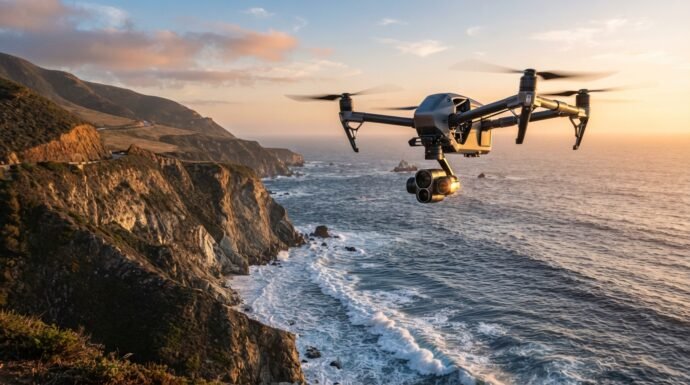
From Budget to Pro: The Top5 Best Drone for Aerial Photography
Finding the best drone for aerial photography can completely transform how you capture the world. Whether you are a professional filmmaker aiming for cinema-grade cinematic angles or a beginner looking to skip complex FAA registration with an ultralight setup, the right drone makes all the difference. Modern quadcopters have evolved rapidly, packing multi-axis gimbals, impressive wind resistance, and massive high-resolution sensors into highly portable bodies.
In our hands-on testing, we evaluated the latest models on camera sensor size, flight stabilization, signal reliability, and real-world battery life. From premium flagships equipped with triple-lens Hasselblad systems to budget-friendly sub-249g travel companions, we have narrowed down the top five options on the market. Read on to discover which flying camera deserves a spot in your gear bag.
Table of Contents
At a Glance: Top 5 Best Drones for Aerial Photography
| Product Name | Key Features | Ideal Use |
|---|---|---|
| DJI Mavic 4 Pro | 100MP Hasselblad Main Camera, 6K HDR Video, 360-degree Infinity Gimbal, 51-Min Flight Time | Professional Photographers & Filmmakers |
| DJI Mini 2 Fly More Combo | Under 249g (No Registration), 4K Video, OcuSync 2.0 (10km Range), 31-Min Flight Time | Beginners & Travel Content Creators |
| Potensic ATOM 4K GPS Drone | Under 249g, 3-Axis Gimbal, 4K/30fps, 96-Min Total Flight Time (3 Batteries) | Budget-Conscious Travel Photographers |
| Ruko F11PRO 2 | Heavy-Duty Build, 6K Photos/4K Video, 70-Min Flight Time, Excellent Wind Resistance | Adults Seeking Stability & Wind Resistance |
| Gleesfun G11PRO | 6K Photos/4K Video, Hardwired Controller Connection, Built-in Remote ID, 70-Min Flight Time | High-Value Performance Seekers |
Top 5 Best Drones for Aerial Photography 2026
🥇 1. DJI Mavic 4 Pro Fly More Combo

The absolute ultimate powerhouse for professional creators who refuse to compromise on image quality. In our testing, the DJI Mavic 4 Pro proved to be an absolute beast. Its massive 100-megapixel Hasselblad main camera captures stunning 6K HDR video at 60 frames per second, delivering rich dynamic range and vivid detail. The innovative triple-lens system and 360-degree Infinity Gimbal allow you to execute complex, sweeping cinematic shots that other platforms simply cannot replicate. Plus, with a massive 51-minute flight time and robust transmission range, you can stay in the air long enough to nail the perfect composition.
- 100MP Hasselblad Camera: Captures unmatched detail and color accuracy.
- 6K HDR Video at 60 FPS: Perfect for high-end post-production color grading.
- 360° Infinity Gimbal: Unlocks previously impossible camera angles.
- 51-Minute Flight Time: Keeps you flying longer without constant battery swaps.
- 24x Digital Zoom: Ideal for capturing wildlife without disturbing their habitat.
Pros & Cons
| Pros | Cons |
|---|---|
| • Industry-leading 100MP tri-camera sensor for unmatched clarity. • Exceptional 51-minute flight endurance on a single battery. • Full 360-degree obstacle sensing keeps the drone safe in low light. • Groundbreaking 360-degree Infinity Gimbal design. | • High premium pricing makes it an investment for serious users. • DJI’s customer support response times can sometimes be slow during repairs. |
🥈 2. DJI Mini 2 Fly More Combo
No products found.
The best ultralight, beginner-friendly drone for creators who want to travel light without sacrificing 4K quality. Weighing under 249 grams, the DJI Mini 2 is roughly the weight of an apple and fits comfortably in the palm of your hand. This featherweight design means you can completely bypass annoying FAA registration requirements. Despite its tiny footprint, it delivers incredibly crisp 4K video stabilized by a physical 3-axis gimbal. Backed by OcuSync 2.0 transmission, it maintains a rock-solid HD video feed up to 10 kilometers away, making it a reliable tool for spontaneous adventures.
- Sub-249 Gram Weight: Skips FAA registration requirements for hassle-free flights.
- 3-Axis Gimbal with 4K Video: Delivers butter-smooth, professional aerial footage.
- OcuSync 2.0 Transmission: Provides a reliable connection up to 10km away.
- Level 5 Wind Resistance: Keeps your shots stable even along windy coastlines.
- Fly More Combo Accessories: Includes extra batteries and a convenient charging hub.
Pros & Cons
| Pros | Cons |
|---|---|
| • Extremely portable and lightweight travel-friendly frame. • Rock-solid 10km OcuSync 2.0 transmission connection. • Excellent wind stability for a drone of its size class. • Easy-to-use automated QuickShot modes for instant cinematic edits. | • Lacks obstacle avoidance sensors, requiring extra pilot caution. • The aggressive geofencing can sometimes prevent takeoff in safe areas without cell service. |
🥉 3. Potensic ATOM 4K GPS Drone Fly More Combo


The ultimate budget-friendly rival to premium brands, offering advanced tracking and massive battery life. The Potensic ATOM is an exceptional sub-249g drone that features a true 3-axis brushless gimbal and a high-quality Sony CMOS sensor. Shooting smooth 4K video at 30 frames per second, it punches well above its price class. The Fly More Combo is an incredible value, packing three batteries that deliver a combined 96 minutes of flight time, alongside a fast parallel charging hub. It is surprisingly durable, handles sport-mode maneuvers with ease, and is backed by outstanding customer service.
- True 3-Axis Brushless Gimbal: Ensures stable, cinematic 4K video in breezy conditions.
- 96 Minutes of Total Flight Time: Three included smart batteries keep you shooting all day.
- Sony CMOS Sensor: Delivers vibrant 12MP photos and detailed 4K/30fps footage.
- PixSync 3.0 Tech: Offers a stable and clear transmission range up to 6km.
- Advanced Visual Tracking: Easily locks onto and follows moving subjects automatically.
Pros & Cons
| Pros | Cons |
|---|---|
| • Incredible value with three batteries and a parallel charging hub. • Smooth 3-axis gimbal stabilization at a fraction of the competitor’s price. • Advanced tracking and QuickShot modes are highly beginner-friendly. • Legendary, fast-responding customer support for peace of mind. | • Auto white balance can occasionally be inconsistent in tricky lighting. • Frequent compass calibration prompts can be slightly tedious before takeoff. |
🏅 4. Ruko F11PRO 2

A heavy-duty, tank-like drone built for adults who prioritize wind stability and a zero-learning-curve experience. If you are intimidated by delicate, lightweight drones, the Ruko F11PRO 2 is the rugged solution you need. Its robust, heavy-duty frame shrugs off stiff winds that would send lighter drones drifting off course. It shoots sharp 6K photos and smooth 4K video thanks to its integrated 3-axis mechanical gimbal. With two batteries providing 70 minutes of total flight time and a built-in search alarm, it is one of the most reliable and easy-to-retrieve quadcopters available.
- Rugged Heavy-Duty Build: Handles high winds with ease for stable outdoor shooting.
- 6K Photos & 4K Video: Captures ultra-high-resolution stills and stable video.
- 70-Minute Flight Time: Comes with two high-capacity smart batteries.
- Built-in Retrieval Alarm: Emits a loud sound to help you find the drone if it lands in brush.
- 10,000ft FPV Transmission: Long-range digital connection for expansive exploration.
Pros & Cons
| Pros | Cons |
|---|---|
| • Exceptional wind resistance and heavy-duty, durable frame. • Zero learning curve with highly intuitive beginner flight modes. • Loud built-in acoustic finder alarm makes retrieval incredibly easy. • Superb customer support that quickly resolves user issues. | • Weighs over 249g, meaning FAA registration is required. • The controller screen can be difficult to read in direct, bright sunlight. |
🏅 5. Gleesfun G11PRO

An outstanding high-value drone featuring a lag-free hardwired connection and built-in FAA Remote ID compliance. The Gleesfun G11PRO is a feature-packed drone that delivers premium performance without the premium price tag. It utilizes a 3-axis brushless gimbal to capture stable 4K video and high-resolution 6K photos. One of its standout features is the hardwired phone-to-controller connection, which eliminates wireless lag and ensures a seamless live video feed up to 10,000 feet. Out of the box, it includes a built-in Remote ID module, ensuring you are fully compliant with current aviation regulations.
- 3-Axis Brushless Gimbal: Delivers cinematic, shake-free aerial footage.
- Hardwired Controller Connection: Provides a lag-free, rock-solid live feed.
- Built-in Remote ID Module: Fully FAA compliant right out of the box.
- 70 Minutes of Flight: Powered by two smart 7.7V 3200mAh batteries.
- Comprehensive Accessory Kit: Comes with a custom carrying case and spare parts.
Pros & Cons
| Pros | Cons |
|---|---|
| • Hardwired connection completely eliminates wireless video transmission lag. • Built-in FAA Remote ID makes legal compliance effortless. • Excellent wind stability and robust flight performance. • Generous 40-piece accessory kit includes everything you need to fly. | • Weighs 357g, which requires FAA registration before taking off. • You must plug the cable into the correct top port; the side port cuts transmission. |
Final Verdict
Choosing the best drone for aerial photography depends on your budget, experience level, and professional needs. If you are a commercial filmmaker or serious creator seeking unmatched detail, the DJI Mavic 4 Pro is the undisputed flagship. For travelers and beginners who want to avoid FAA registration while keeping things highly portable, the DJI Mini 2 is an excellent choice. If you want the absolute best value-for-money kit with massive flight times, the Potensic ATOM is a phenomenal alternative.
| Product | Best For |
|---|---|
| DJI Mavic 4 Pro | Best Overall / Professional Filmmakers |
| DJI Mini 2 | Best for Travel & Beginners (No Registration) |
| Potensic ATOM | Best Budget Alternative with 3-Axis Gimbal |
| Ruko F11PRO 2 | Best Rugged Build & Wind Stability |
| Gleesfun G11PRO | Best Value with Hardwired Lag-Free Feed |
FAQs
Do I need a license to fly a drone for aerial photography?
If you are flying a drone that weighs under 249 grams (like the DJI Mini 2 or Potensic ATOM) purely for recreational purposes, you do not need to register it with the FAA. However, if your drone weighs 249 grams or more, or if you plan to use your drone for commercial photography (making money from your shots), you must register the drone and obtain an FAA Part 107 remote pilot certificate.
What is the advantage of a 3-axis gimbal on a drone?
A 3-axis gimbal mechanically stabilizes the camera on three axes: pitch (tilt), roll, and yaw (pan). This ensures that even if the drone is tilting, buffeted by wind, or turning sharply, the camera remains perfectly level and isolated from vibration, resulting in smooth, cinematic video footage.
How does wind resistance affect aerial photography?
Wind resistance dictates how stable your drone remains in breezy conditions. Drones with higher wind resistance (like the Ruko F11PRO 2 or DJI Mavic 4 Pro) can hover steadily in strong winds, preventing blurry photos or shaky video. Lightweight drones may drift or consume battery power faster as their motors work harder to maintain position.
What is FAA Remote ID, and why does it matter?
Remote ID is an FAA regulation requiring drones to broadcast identification and location information while in flight. It acts as a digital license plate for safety and airspace integration. Drones like the Gleesfun G11PRO come with built-in Remote ID modules, ensuring you are legally compliant without needing external hardware.
Can I fly my photography drone without cellular service?
Yes, you can fly your drone without cellular service because the remote controller communicates directly with the quadcopter via radio frequency or proprietary wireless protocols (like DJI’s OcuSync). However, without cellular service, you may not be able to download live maps, update firmware, or easily override geofencing restrictions in real time.
Last update on 2026-10-20/Affiliate links / Images from Amazon Product Advertising API